



What is paraxanthine? Paraxanthine is the main compound your liver makes from caffeine: roughly 70% of the caffeine you drink is converted into it. Like caffeine, it blocks adenosine, the signal that builds as you tire, but it clears from the body somewhat faster. Supplement brands can now add it directly, and MAXIS Paraxanthine Pre-Workout uses enfinity® paraxanthine as its stimulant.
Key takeaways
- Paraxanthine (1,7-dimethylxanthine) is the predominant metabolite of caffeine in people, accounting for about 70 to 72% of ingested caffeine.
- In a small pharmacokinetic study, its half-life was 3.1 hours, against 4.1 hours for caffeine.
- enfinity® is a branded paraxanthine ingredient. Its developer self-affirmed it as GRAS in 2021 for foods and beverages at up to 300 mg.
- The human trials are small. Cognitive trials co-authored by the developer reported benefits at 100 to 200 mg; a separate team's rowing study found no clear performance gain from paraxanthine alone.
- It is still a stimulant. Count it alongside coffee and other caffeine sources.
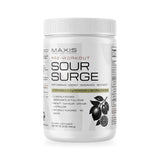
Featured in this article: MAXIS Paraxanthine Pre-Workout – Sour Surge. 150 mg enfinity® paraxanthine, 2,400 mg CarnoSyn® beta-alanine and 4,500 mg L-citrulline malate per 1.5-scoop serving, about 27 servings per tub. Supports energy, endurance and performance.† See the full label and dosing →
What is paraxanthine, and where does it come from?
The research below describes paraxanthine as an ingredient, not the finished MAXIS product.
Caffeine, paraxanthine, theobromine and theophylline all belong to the methylxanthine family. When you drink coffee, the liver enzyme CYP1A2 does most of the work of breaking caffeine down, and the largest share becomes paraxanthine: about 70 to 72%, according to a 2023 toxicology paper that reviewed the earlier literature. How fast that happens varies from person to person, largely because CYP1A2 activity varies.
Paraxanthine also occurs naturally in small amounts in a few plants and foods, including green and roasted coffee beans, cacao fruit and citrus flowers. Those amounts are tiny, so most of the paraxanthine in your body comes from the caffeine you drink. Supplements now supply it directly.
How paraxanthine works, compared with caffeine
Caffeine and paraxanthine share the same basic mechanism. Both block adenosine A1 and A2A receptors, which is how caffeine reduces the sense of tiredness. One lab study in horse brain tissue found paraxanthine bound those receptors more strongly than caffeine, but that has not been shown to mean a stronger effect in people.
The clearest human difference is speed. In a 1986 study, six healthy men took caffeine, paraxanthine and the other two metabolites on separate occasions. Paraxanthine's average half-life was 3.1 hours, against 4.1 hours for caffeine. That is one small study, and individual clearance varies, so read it as a tendency rather than a rule. Our article on paraxanthine vs. caffeine goes deeper on the two.

What is enfinity® paraxanthine?
enfinity® is a branded paraxanthine ingredient, the form used in MAXIS Pre-Workout. It was developed by Ingenious Ingredients, a company founded in 2018. In November 2021 the company announced a self-affirmed GRAS (generally recognized as safe) determination for use in foods and beverages such as energy drinks, at up to 300 mg. Self-affirmed means the company's own expert review reached that conclusion; it is not an FDA approval. In 2023, TSI Group became its exclusive distributor.
Most of the published human research on paraxanthine used enfinity®, and most of it was co-authored by the ingredient's developers. That is worth knowing when you weigh the results.
What the human studies on paraxanthine measured
| Study | Who and what | What was measured |
|---|---|---|
| Xing et al., 2021 | 12 healthy adults; 50, 100 or 200 mg paraxanthine vs. placebo, single dose and 7 days | Several memory, reasoning and reaction-time scores improved vs. placebo at each dose, most consistently at 100 and 200 mg. No differences in reported side effects or blood chemistry. |
| Yoo et al., 2024 | 12 trained runners; 200 mg paraxanthine, 200 mg caffeine, both, or placebo before a 10-km run | After the run, some card-sorting (reasoning) scores were better with paraxanthine than with caffeine, and reaction time was faster than with placebo. Adding caffeine gave no extra benefit. |
| Bingol Diedhiou et al., 2026 | 14 university rowers; 200 mg caffeine, paraxanthine, both, or placebo before a 2,000-m ergometer trial | Only the combination was faster than placebo. Paraxanthine alone showed no clear performance gain but more favorable self-rated sleep than the caffeine conditions. |
The first two trials came from the same research group and included the developers among the authors. The rowing study was run by a separate team, and its sleep findings were self-reported, without objective sleep measurement. Put together, the evidence suggests paraxanthine acts like a stimulant and is tolerated well at these doses in healthy young adults, but it is early, and none of these trials showed paraxanthine to be a stronger performance aid than caffeine. For tolerance, side effects and who should skip it, see Is Paraxanthine Safe?

How to read paraxanthine on a pre-workout label
- Look for a stated amount. The human studies used 50 to 200 mg. A label that hides paraxanthine inside a proprietary blend leaves you guessing.
- Check for other stimulant sources. Some formulas combine paraxanthine with caffeine; cocoa extracts contain theobromine and can carry small amounts of caffeine.
- Add up your day. The FDA cites 400 mg of caffeine a day as an amount not generally associated with negative effects in healthy adults. That figure is for caffeine, but it is sensible to count paraxanthine alongside coffee, tea and energy drinks.
- Mind the clock. A shorter half-life does not mean no effect on sleep. Leave several hours between your last stimulant and bed; our pre-workout timing guide explains why.
Skip stimulant products, or ask your doctor first, if you are under 18, pregnant or breastfeeding, sensitive to caffeine, take prescription medication, or have a heart condition or high blood pressure.
Where MAXIS Paraxanthine Pre-Workout fits
MAXIS Paraxanthine Pre-Workout – Sour Surge uses enfinity® paraxanthine as its stimulant: 150 mg per 1.5-scoop serving, 100 mg in a single scoop and 200 mg at the two-scoop daily maximum, which stays within the 50 to 200 mg range the human studies used. Each serving also provides 150 mg cocoa bean extract, 2,400 mg CarnoSyn® beta-alanine, 4,500 mg L-citrulline malate and 3,750 mg MalTor™ taurine-L-malic acid complex, with no sugar and no added caffeine. Because the cocoa extract can contain small amounts of caffeine, we don't call it caffeine-free. It supports energy, endurance and performance.†
The label directs adults to mix 1.5 scoops with 12 oz of water 20 to 30 minutes before training, to start with one scoop to assess tolerance, and never to exceed two scoops in 24 hours. About 27 servings per tub. It sits in our Train collection.
Shop MAXIS Paraxanthine Pre-Workout →
Free US shipping on every order. Subscribe & Save: 10% off, and an extra 5% on 2+ subscribed items.
Pairs well with
- MAXIS Micronized Creatine Monohydrate: the pre-workout contains no creatine, so the two don't overlap. One 5 g scoop a day, at any time, supports increases in strength and lean body mass when combined with resistance training.†
The Performance Stack brings Paraxanthine Pre-Workout, Micronized Creatine Monohydrate and Hydrate electrolytes together in one order.
FAQ
Is paraxanthine natural?
It is a natural compound: your body makes it from caffeine, and small amounts occur in coffee beans, cacao and citrus flowers. Supplement ingredients supply it in a concentrated form.
Is paraxanthine better than caffeine?
Not proven. It clears somewhat faster, and trials co-authored by the developer found cognitive benefits at 100 to 200 mg, but a separate team's rowing study found no clear performance gain from paraxanthine alone. Think of it as an alternative stimulant, not an upgrade.
Is paraxanthine a stimulant?
Yes. It blocks adenosine receptors, as caffeine does. Handle it like caffeine for timing, daily intake and who should avoid it.
How much paraxanthine is in MAXIS Pre-Workout?
150 mg of enfinity® paraxanthine per 1.5-scoop serving, 100 mg in one scoop and 200 mg at the two-scoop maximum. See the full label on the product page.
References
- Szlapinski SK, Charrette A, Guthrie N, Hilmas CJ (2023). Paraxanthine safety and comparison to caffeine. Frontiers in Toxicology. doi:10.3389/ftox.2023.1117729
- Lelo A, Birkett DJ, Robson RA, Miners JO (1986). Comparative pharmacokinetics of caffeine and its primary demethylated metabolites paraxanthine, theobromine and theophylline in man. British Journal of Clinical Pharmacology. PMC1401099
- Xing D, Yoo C, Gonzalez D, et al. (2021). Dose-Response of Paraxanthine on Cognitive Function: A Double Blind, Placebo Controlled, Crossover Trial. Nutrients. doi:10.3390/nu13124478
- Yoo C, Xing D, Gonzalez DE, et al. (2024). Paraxanthine provides greater improvement in cognitive function than caffeine after performing a 10-km run. Journal of the International Society of Sports Nutrition. doi:10.1080/15502783.2024.2352779
- Bingol Diedhiou A, Yildirim UC, Ozdenk S, et al. (2026). Comparative effects of caffeine and paraxanthine on rowing performance and sleep quality: a randomized crossover study. Journal of the International Society of Sports Nutrition. doi:10.1080/15502783.2026.2650339
- NutraIngredients (2021). Ingenious Ingredients self-affirms GRAS status for paraxanthine ingredient. nutraingredients.com
- Nutritional Outlook (2023). TSI Group is now the exclusive distributor of Enfinity energy ingredient. nutritionaloutlook.com
- U.S. Food and Drug Administration. Spilling the Beans: How Much Caffeine Is Too Much? fda.gov
†These statements have not been evaluated by the Food and Drug Administration. This product is not intended to diagnose, treat, cure, or prevent any disease.


