
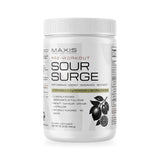



Is paraxanthine safe? For healthy adults, the short answer is that the early evidence looks reassuring but is thin: small human trials of single 100 to 300 mg doses reported no serious problems, and rat toxicology studies raised no serious red flags, with one finding it at least as well tolerated as caffeine. Paraxanthine is still a stimulant, though, so its likely side effects are the familiar caffeine ones, and long-term human safety data do not exist yet. That is the honest frame for anyone considering a paraxanthine pre-workout such as MAXIS Sour Surge.
Key takeaways
- Paraxanthine is the main compound the liver makes from caffeine, and in a 1995 human study it raised diastolic blood pressure and adrenaline much as caffeine did.
- Two 90-day rat toxicology studies found no deaths among rats given paraxanthine and no adverse effects at the highest doses tested. In one, paraxanthine had a slightly higher no-adverse-effect level than caffeine.
- Human trials so far are small, single-dose studies of 12 to 21 people, and most involved the ingredient's maker.
- The FDA's 400 mg a day figure applies to caffeine, not paraxanthine, but it is a sensible reference point for total stimulant intake.
- Skip it if you are under 18, pregnant or breastfeeding, sensitive to stimulants, or have heart or blood pressure concerns without a doctor's input.
Is paraxanthine safe? What the human studies measured
The research below describes paraxanthine as an ingredient, not the finished MAXIS formula.
Human studies so far:
| Study | Who and how much | What was measured | Safety-relevant result |
|---|---|---|---|
| Benowitz et al., 1995 | 12 people; 2 or 4 mg per kg of body weight, compared with caffeine and placebo | Blood pressure, adrenaline, free fatty acids | Both compounds raised diastolic blood pressure and adrenaline. At 4 mg/kg the effects were similar in size; at 2 mg/kg caffeine appeared to have the larger effect. |
| Yoo et al., 2021 | 13 adults (10 men, 3 women); one 200 mg dose | Cognitive tests over six hours; reported side effects | The authors reported no side effects or adverse events. |
| Gross et al., 2024 | 21 adults; single doses of 100, 200 or 300 mg | Energy expenditure, hunger, heart rate, blood pressure over three hours | Blood pressure did not change. Heart rate was lower than placebo at two time points with 100 mg. |
For context, 4 mg per kg is about 320 mg for an adult weighing 80 kg (176 lb), about double the 150 mg in a full serving of Sour Surge. The older study matters because it shows paraxanthine is not a gentler molecule in every respect. It acts on the body's stress-hormone and blood pressure response much as caffeine does.
The newer trials are encouraging but limited. Each tested one dose on one day, so they say nothing about daily use over months. They were small, enrolled young healthy adults, and several authors were affiliated with the ingredient's maker. Our paraxanthine vs. caffeine guide covers what those trials found for focus and attention.
What the toxicology studies found
Most of the safety data for paraxanthine come from standard regulatory tests in rats and in cell cultures.
- Purpura et al., 2021. Using the same branded paraxanthine found in MAXIS Sour Surge, rats received 75, 150 or 300 mg per kg daily for 28 and 90 days. There were no deaths or toxic effects, and the no-observed-adverse-effect level was at least 300 mg per kg, the highest dose tested. Bacterial and cell-based mutation tests and an in vivo test were negative. The authors were affiliated with the ingredient maker.
- Szlapinski et al., 2023. This 90-day rat study, using paraxanthine from a different maker, ran caffeine alongside it at two matching doses. Two rats in the high-dose caffeine group died late in the study; none in the paraxanthine groups did. The no-observed-adverse-effect level was 185 mg per kg for paraxanthine and 150 mg per kg for caffeine. Both compounds caused short-lived hyperactivity and reduced weight gain. One cell-based mutation assay showed a dose-related rise under one test condition, while the other genetic tests, including one in live rats, were negative.
Rat studies use very high doses and look for organ damage or genetic red flags; the published work so far has not flagged a serious one. The authors of the 2023 study wrote that paraxanthine appears relatively safe but that its safety still needs fuller characterization. That is a fair summary.
The ingredient's maker has also reported a self-affirmed GRAS (generally recognized as safe) determination for food and beverage uses at levels up to 300 mg. Self-affirmed means the company made that determination itself rather than through an FDA review, and it is not an FDA approval.
Paraxanthine side effects to expect
Because paraxanthine works like caffeine, the realistic side effects are the familiar stimulant ones, especially at higher doses or when stacked with coffee or energy drinks. The FDA lists these for too much caffeine:
- a faster or pounding heartbeat
- a rise in blood pressure
- jitters or feeling anxious
- trouble sleeping
- upset stomach, nausea or headache
The FDA cites 400 mg of caffeine a day as an amount not generally linked to negative effects in most adults, and notes that sensitivity varies widely. That figure is for caffeine, and no equivalent official figure exists for paraxanthine. The practical approach is to count paraxanthine as part of your daily stimulant total and add up coffee, tea, energy drinks and pre-workout together.
One side effect people often blame on the stimulant is actually something else. The skin tingling many feel after a pre-workout comes from beta-alanine, not paraxanthine. It is a known, temporary effect that fades on its own.
Who should skip it or ask a doctor first
- Anyone under 18.
- Anyone pregnant, trying to become pregnant or breastfeeding.
- People sensitive to caffeine or other stimulants.
- Anyone with a heart condition or high blood pressure, or who takes prescription medication, especially drugs that affect heart rate, blood pressure, mood or sleep.
- Anyone who trains late and finds that stimulants disturb their sleep.
- Drug-tested athletes who need a certified product.
Where MAXIS Sour Surge Pre-Workout fits
Paraxanthine Pre-Workout, Sour Surge provides 150 mg of enfinity® paraxanthine per 1.5-scoop serving (17.25 g), along with 150 mg of cocoa bean extract, 2,400 mg CarnoSyn® beta-alanine, 4,500 mg L-citrulline malate and 3,750 mg MalTor™ taurine-L-malic acid complex. Paraxanthine supports energy and focus.† The full formula supports energy, endurance and performance.†
The label is built around tolerance. One scoop gives 100 mg of paraxanthine, the 1.5-scoop serving 150 mg, and the two-scoop daily maximum 200 mg, which is within the range used in the human trials above. Start with one scoop, take it 20 to 30 minutes before training, and do not exceed two scoops in 24 hours. No caffeine is added, but cocoa naturally contains theobromine and can contain small amounts of caffeine, so we do not call the product caffeine-free. Count it with your coffee.
It pairs naturally with creatine, which this formula does not contain; see our guide on when to take creatine. For the rest of the training lineup, browse Strength & Performance.
FAQ
Is paraxanthine safer than caffeine?
Not proven. In one 90-day rat study paraxanthine had a slightly higher no-adverse-effect level than caffeine, but no large human trial has compared their safety. In people, both raised diastolic blood pressure and adrenaline in a 1995 study.
Does paraxanthine raise blood pressure?
It can. A 1995 study found it raised diastolic blood pressure, much as caffeine did. A 2024 trial of single 100 to 300 mg doses found no change in blood pressure over three hours. If you have blood pressure concerns, talk to your doctor first.
Can you take paraxanthine every day?
The published human trials tested single doses, so there are no long-term daily-use data yet. If you use it regularly, stay within the label's limits and count it toward your total stimulant intake.
How much paraxanthine is too much?
There is no official upper limit. The human trials described here used up to 300 mg in a single dose. Follow the label on any product you use; for Sour Surge that means no more than two scoops, or 200 mg of paraxanthine, in 24 hours.
References
- Benowitz NL, Jacob P, Mayan H, Denaro C (1995). Sympathomimetic effects of paraxanthine and caffeine in humans. Clinical Pharmacology and Therapeutics. DOI
- Yoo C, Xing D, Gonzalez D, et al. (2021). Acute paraxanthine ingestion improves cognition and short-term memory and helps sustain attention in a double-blind, placebo-controlled, crossover trial. Nutrients. MDPI
- Gross KN, Allen LE, Hagele AM, et al. (2024). A dose-response study to examine paraxanthine's impact on energy expenditure, hunger, appetite, and lipolysis. Journal of Dietary Supplements. DOI
- Purpura M, Jäger R, Falk M (2021). An assessment of mutagenicity, genotoxicity, acute-, subacute and subchronic oral toxicity of paraxanthine (1,7-dimethylxanthine). Food and Chemical Toxicology. PubMed
- Szlapinski SK, Charrette A, Guthrie N, Hilmas CJ (2023). Paraxanthine safety and comparison to caffeine. Frontiers in Toxicology. DOI
- NutraIngredients (2021). Ingenious Ingredients self-affirms GRAS status for paraxanthine ingredient. NutraIngredients
- U.S. Food and Drug Administration. Spilling the beans: how much caffeine is too much? FDA
†These statements have not been evaluated by the Food and Drug Administration. This product is not intended to diagnose, treat, cure, or prevent any disease.


