



For most people, the best time to take pre-workout is 20 to 60 minutes before training. Caffeine-type stimulants reach peak blood levels roughly 30 to 120 minutes after you swallow them, and caffeine research most often dosed about 60 minutes before exercise; the MAXIS Paraxanthine Pre-Workout label directs 20 to 30 minutes. The more important timing rule sits at the other end of the day: stimulants taken within about six hours of bed can cut into sleep, even when you don't notice it.
Not every ingredient works on the same clock. Some act within the hour, while beta-alanine depends on daily intake over weeks. Here is how each common ingredient is timed in research, and how to fit that around when you train.
Key takeaways
- A 20- to 60-minute window before training covers the timing used for most fast-acting pre-workout ingredients. Follow your product's label first.
- The ISSN position stand on caffeine notes that 60 minutes before exercise is the most commonly studied timing, and that peak blood levels vary with the form taken.
- In a sleep study, 400 mg of caffeine taken six hours before bed still reduced measured sleep by more than an hour. Plan your last stimulant dose around bedtime, not just your workout.
- Beta-alanine builds up in muscle over weeks of daily intake, so the minute you take it matters little.
- Citrulline malate trials mostly dosed 40 to 60 minutes before lifting.
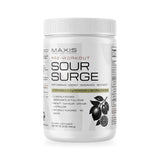
Featured in this article: MAXIS Paraxanthine Pre-Workout – Sour Surge. 150 mg enfinity® paraxanthine, 2,400 mg CarnoSyn® beta-alanine and 4,500 mg L-citrulline malate per 1.5-scoop serving, about 27 servings per tub. Supports energy, endurance and performance.† See the full label and dosing →
How long before a workout should you take pre-workout?
The research below concerns individual ingredients, not the finished MAXIS product.
Caffeine is the most studied pre-workout ingredient, and its timing sets the pattern. The International Society of Sports Nutrition (ISSN) 2021 position stand reports that caffeine consistently improves exercise performance at 3 to 6 mg per kg of body mass, and that 60 minutes before exercise is the timing most often used in studies. It also notes that peak blood levels arrive anywhere from 30 to 120 minutes after an oral dose, and that caffeine gum peaked sooner than capsules in the trials it summarized.
A powdered pre-workout mixed in water is a practical middle ground. There is no evidence that waiting a full hour is required. If you feel a pre-workout late into your session, take it a little earlier next time; if it fades before your hardest sets, take it a little later.

Paraxanthine pre-workout timing
Paraxanthine is the main compound your liver makes from caffeine. In a small 1986 pharmacokinetic study of six healthy men, its average half-life was 3.1 hours, compared with 4.1 hours for caffeine. No trial has compared different pre-exercise timings for paraxanthine directly, so a 20- to 30-minute window is a practical guide rather than a tested optimum. For how the two compare, see Paraxanthine vs. Caffeine, and for tolerance and side effects, Is Paraxanthine Safe?
Best time to take pre-workout, by ingredient
| Ingredient | How it works | Timing used in research | Does pre-workout timing matter? |
|---|---|---|---|
| Caffeine | Acute stimulant | Most often about 60 minutes before exercise | Yes, within a broad window |
| Paraxanthine | Acute stimulant; main caffeine metabolite | No direct timing comparisons yet | Somewhat; follow the label |
| L-citrulline malate | Acute; involved in nitric oxide production | Mostly 40 to 60 minutes before lifting | Yes, for the acute repetition effect |
| Beta-alanine | Builds muscle carnosine over weeks | 4 to 6 g daily for at least 2 to 4 weeks | Little; daily intake matters more |
Citrulline malate
A 2021 meta-analysis pooled eight studies with 137 participants. Taking 6 to 8 g of citrulline malate 40 to 60 minutes before resistance exercise increased repetitions by about three (6.4%) compared with placebo. That gives citrulline the clearest research basis for taking it within the hour. One serving of MAXIS Pre-Workout provides 4,500 mg, and the two-scoop maximum 6,000 mg, so only the two-scoop maximum reaches the low end of the research range.
Beta-alanine
Beta-alanine raises carnosine in muscle, which helps buffer acid during hard efforts, but carnosine only builds with daily intake. The ISSN position stand describes 4 to 6 g a day for at least two to four weeks, with the clearest effects in efforts lasting one to four minutes, and lists tingling (paraesthesia) as the only reported side effect. Our article on why pre-workout makes you itch explains it.
Can you take pre-workout at night?
The biggest timing mistake is usually not taking pre-workout too early before training, but too close to bed. In a 2013 study by Drake and colleagues, 12 healthy sleepers took 400 mg of caffeine at bedtime, three hours before, or six hours before. Even at six hours, an in-home monitor recorded more than an hour less total sleep, yet participants did not seem to notice it.
That study used caffeine, not paraxanthine, at a dose larger than a typical serving. Paraxanthine's shorter half-life suggests it may clear sooner, but no published trial has measured its effect on sleep. A sensible rule for evening training:
- Take your last stimulant dose at least six hours before bed.
- If you train inside that window, try one scoop instead of the full serving, or a stimulant-free session, and see how you sleep.
- Count every stimulant source that day, including coffee, tea and energy drinks.

Who should skip stimulant pre-workouts
Skip stimulant pre-workouts, or ask your doctor first, if you are under 18, pregnant or breastfeeding; have a heart condition or high blood pressure; take prescription medication; or are sensitive to caffeine or other stimulants.
Where MAXIS Paraxanthine Pre-Workout fits
MAXIS Paraxanthine Pre-Workout – Sour Surge provides, per 1.5-scoop serving, 150 mg enfinity® paraxanthine, 150 mg cocoa bean extract, 2,400 mg CarnoSyn® beta-alanine, 4,500 mg L-citrulline malate, 3,750 mg MalTor™ taurine-L-malic acid complex, 225 mg organic beet root powder, 750 mcg vitamin B12, and sodium, potassium, magnesium and chloride, with no sugar and no added caffeine. It supports energy, endurance and performance.†
The label directs adults to mix 1.5 scoops with 12 oz of water and drink it 20 to 30 minutes before training. Start with one scoop to assess tolerance, and do not exceed two scoops in 24 hours. One serving contains less beta-alanine than the ISSN's daily range and less citrulline malate than most trials used. It sits in our Train collection.
Shop MAXIS Paraxanthine Pre-Workout →
Subscribe & Save: 10% off plus free shipping, and an extra 5% on 2+ subscribed items. Every US order ships free.
Pairs well with
- MAXIS Micronized Creatine Monohydrate: the pre-workout contains no creatine, so the two don't overlap. One scoop gives 5 g, taken daily at any time, and it supports increases in strength and lean body mass when combined with resistance training.† See Best Time to Take Creatine.
All three training basics come together in the Performance Stack: Paraxanthine Pre-Workout, Micronized Creatine Monohydrate and Hydrate electrolytes in one order.
Related reading
FAQ
How long does pre-workout take to kick in?
Caffeine reaches peak blood levels 30 to 120 minutes after an oral dose, depending on the form and the person. Taking it 20 to 60 minutes before training lines that up with your session.
How long does pre-workout last?
The stimulant stays in your system for hours. In the 1986 study, the average half-life was 4.1 hours for caffeine and 3.1 hours for paraxanthine, and it varies between people.
Can I take pre-workout right before I start?
You can, but you may be into your warm-up or first sets before it takes effect. Taking it 20 to 30 minutes ahead lines it up better with your main work.
What time should I stop taking pre-workout before bed?
Aim for at least six hours. In a controlled study, caffeine taken six hours before bed still reduced measured sleep by more than an hour.
References
- Guest NS, et al. (2021). International society of sports nutrition position stand: caffeine and exercise performance. Journal of the International Society of Sports Nutrition. PMC7777221
- Lelo A, Birkett DJ, Robson RA, Miners JO (1986). Comparative pharmacokinetics of caffeine and its primary demethylated metabolites paraxanthine, theobromine and theophylline in man. British Journal of Clinical Pharmacology. PMC1401099
- Drake C, et al. (2013). Caffeine effects on sleep taken 0, 3, or 6 hours before going to bed. Journal of Clinical Sleep Medicine. Summary: American Academy of Sleep Medicine
- (2021). Acute effect of citrulline malate on repetition performance during strength training: a systematic review and meta-analysis. International Journal of Sport Nutrition and Exercise Metabolism, 31(4), 350–358. Abstract record
- Trexler ET, et al. (2015). International society of sports nutrition position stand: Beta-Alanine. Journal of the International Society of Sports Nutrition. Full text
†These statements have not been evaluated by the Food and Drug Administration. This product is not intended to diagnose, treat, cure, or prevent any disease.


