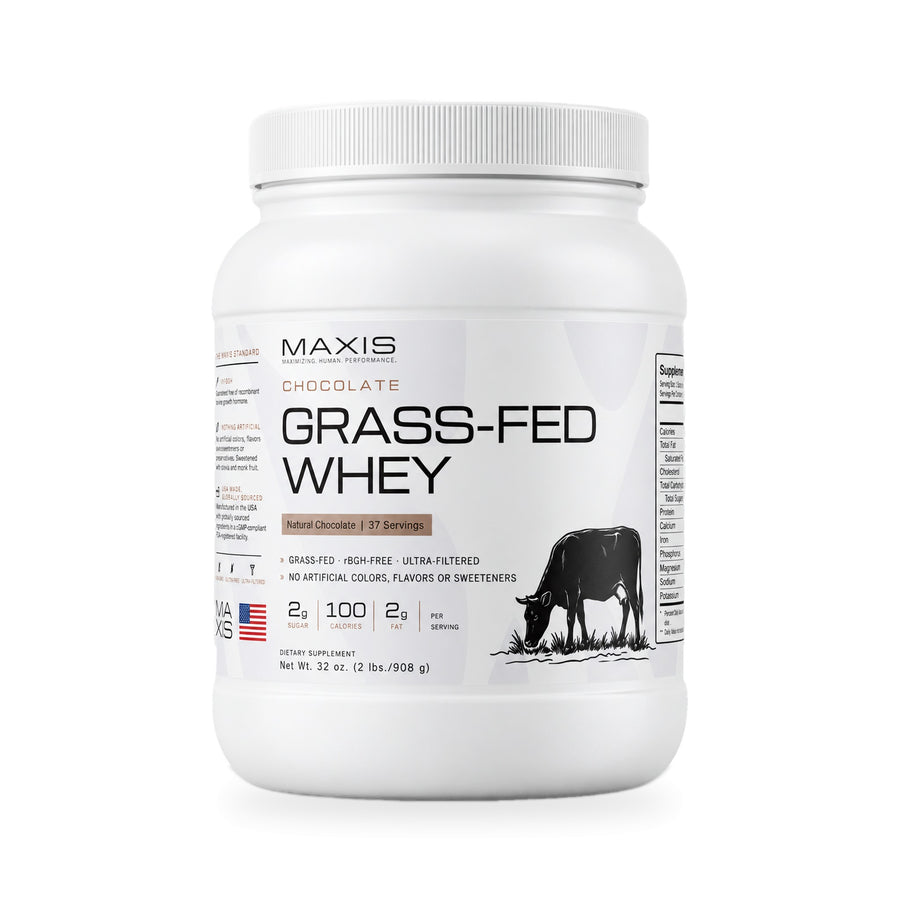

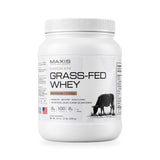


A protein powder without artificial sweeteners is one whose ingredient list contains none of the six sweeteners FDA approves as food additives, such as sucralose, acesulfame potassium or aspartame. Most of these powders are sweetened instead with purified stevia leaf extract, monk fruit extract or both. MAXIS Grass-Fed Whey Protein (Vanilla) is one example: 19 g of whey protein per scoop, sweetened with stevia and monk fruit. This guide shows how to check any label in under a minute.
Key takeaways
- "Artificial sweetener" has no single legal definition on a label. In practice it means the FDA-approved sweetener additives: saccharin, aspartame, acesulfame potassium, sucralose, neotame and advantame.
- Purified steviol glycosides (from stevia) and monk fruit extract reach the market through FDA's GRAS process instead, and are plant-derived.
- The only reliable check is the ingredient list. Front-of-pack words such as "natural" or "zero sugar" don't tell you which sweetener is inside.
- The sweetener doesn't change what the protein does. Protein per scoop and total daily intake matter more.
Featured in this article: MAXIS Grass-Fed Whey Protein (Vanilla). 19 g of whey protein per 24 g scoop, sweetened with stevia and monk fruit, 37 servings per tub. See the full label and dosing →
What counts as an artificial sweetener in protein powder
FDA groups the very sweet sugar substitutes as high-intensity sweeteners. Six are approved as food additives. Two more categories, certain highly purified steviol glycosides from the stevia leaf and extracts of monk fruit (luo han guo), are used under GRAS ("generally recognized as safe") notices that FDA has not questioned. FDA states that the approved sweeteners are safe for the general population under their intended conditions of use. So choosing a powder without them is usually about taste and preference, not about avoiding something unsafe.
Here is how FDA describes their sweetness compared with table sugar:
| Sweetener | Route to market | Sweetness vs. sugar |
|---|---|---|
| Aspartame | Food additive | About 200× |
| Acesulfame potassium (ace-K) | Food additive | About 200× |
| Saccharin | Food additive | 200–700× |
| Sucralose | Food additive | About 600× |
| Neotame | Food additive | About 7,000–13,000× |
| Advantame | Food additive | About 20,000× |
| Steviol glycosides (stevia) | GRAS notice | 200–400× |
| Monk fruit extract | GRAS notice | 100–250× |
Sugar alcohols such as erythritol are a separate group. FDA notes they range from 25% to 100% as sweet as sugar.

How to find a protein powder without artificial sweeteners
FDA's own advice is simple: look for the sweetener's name in the ingredient list. A quick routine:
- Read the ingredient list, not the front of the tub. Scan for sucralose, acesulfame potassium (often written "ace-K"), aspartame, saccharin, neotame and advantame. Check for each one separately; a powder can contain more than one.
- Identify what sweetens it instead. "Stevia leaf extract," "Reb A" or "steviol glycosides" means stevia. "Luo han guo extract" or "monk fruit extract" means monk fruit. Sugar alcohols end in "-itol."
- Check total sugars. A powder can avoid artificial sweeteners by using sugar. Whey concentrate naturally carries some milk sugar; MAXIS Grass-Fed Whey (Vanilla), for example, shows 2 g of sugars per scoop with no added sugar.
- Check protein per scoop against scoop weight. A 24 g scoop with 19 g of protein is about 79% protein by weight. Flavors, gums and fillers lower that share.
- Check the allergen line. Whey contains milk, and some flavors add soy.
For more on the protein itself, see grass-fed whey concentrate vs. isolate.
Stevia and monk fruit: what they are
Stevia sweeteners are purified compounds called steviol glycosides, extracted from the leaves of Stevia rebaudiana. On a label they often appear as "Reb A" (rebaudioside A). FDA draws a line between these purified extracts and whole-leaf or crude stevia, which is not permitted as a sweetener. Monk fruit sweetener is an extract of Siraitia grosvenorii, also called luo han guo; FDA notes its sweetness depends on the extract's content of compounds called mogrosides.
Because both are hundreds of times sweeter than sugar, only a trace is needed per scoop. Some people notice a slight aftertaste from either one, and blending the two is one way to balance the flavor. MAXIS Grass-Fed Whey (Vanilla) uses stevia leaf extract (Reb A) plus luo han guo extract, with natural flavor, and lists no sucralose, aspartame or acesulfame-K. The Chocolate version uses the same sweeteners with cocoa powder, at 17 g of protein per scoop.

Does the sweetener change what the protein does?
No. The sweetener is there for taste. What matters for training is how much protein you get and how you spread it across the day. The International Society of Sports Nutrition's position stand puts daily intake at 1.4 to 2.0 g per kg of body weight for building and maintaining muscle, in doses of about 0.25 g per kg, or 20 to 40 g, every three to four hours. It also notes that each dose should supply roughly 700 to 3,000 mg of leucine, and that rapidly digested proteins rich in essential amino acids stimulate muscle building most. Whey, the fast-digesting protein in milk, is naturally rich in essential amino acids including leucine. This research describes protein as an ingredient, not the finished MAXIS product.
In practice, a single scoop covers one of those doses alongside meals. Our guide to how much protein per day to build muscle walks through the math by body weight.
Where MAXIS Grass-Fed Whey fits
MAXIS Grass-Fed Whey Protein (Vanilla) provides 19 g of whey protein from a blend of concentrate and isolate in each 24 g scoop, with 100 calories, 2 g of carbohydrate and 2 g of sugars from the milk. It is sweetened with stevia and monk fruit and has no added sugar. The whey comes from grass-fed cows not treated with rBGH. Protein helps build and repair muscle when paired with resistance training.† Mix one level scoop into 8 oz of water, milk or juice after training or whenever a meal is short on protein. Prefer chocolate? The Chocolate tub has 17 g per scoop. It contains milk and soy, while Vanilla declares milk only. Neither is lactose-free, and neither carries a banned-substance certification, so drug-tested athletes should check with their governing body first.
Subscribe & Save: 10% off plus free shipping, and an extra 5% on 2+ subscribed items. Every US order ships free.
Pairs well with
- MAXIS Micronized Creatine Monohydrate: 5 g per scoop and nothing else, so it stirs straight into the same shake. Creatine supports increases in strength and lean body mass when combined with resistance training.†
- MAXIS Hydrate Sugar-Free Electrolyte Powder: 600 mg of sodium per stick for the sessions you sweat through, then protein when the session ends.
Buying both together? The Strength Stack (Vanilla) combines Grass-Fed Whey and Micronized Creatine in one order, and there is also a Chocolate version. Browse the full Train collection for the rest of the lineup.
FAQ
Is stevia an artificial sweetener?
Not in the way most people use the term. Purified steviol glycosides are extracted from the stevia plant and reach the market through FDA's GRAS process, while the sweeteners usually called artificial, such as sucralose and aspartame, are approved food additives. Both groups are regulated by FDA.
Is sucralose safe in protein powder?
FDA lists sucralose as an approved food additive and considers it safe for the general population under its intended conditions of use. Some people simply prefer to avoid it. If you prefer to skip it, check the ingredient list for both sucralose and acesulfame potassium.
Does protein powder without artificial sweeteners taste different?
Usually a little. Stevia and monk fruit each have a slight aftertaste, and blends of the two are used to round it out. Mixing with milk instead of water softens it further and adds the milk's own protein and calories.
How much protein is in one scoop of MAXIS Grass-Fed Whey?
Vanilla has 19 g of protein per 24 g scoop and Chocolate has 17 g, each with 100 calories. The cocoa takes up part of the chocolate scoop.
References
- U.S. Food and Drug Administration (2025). Aspartame and Other Sweeteners in Food. fda.gov
- U.S. Food and Drug Administration (2017). High-Intensity Sweeteners. fda.gov
- Jäger R, Kerksick CM, Campbell BI, et al. (2017). International Society of Sports Nutrition Position Stand: protein and exercise. Journal of the International Society of Sports Nutrition 14:20. Position points as summarized by NutraIngredients. nutraingredients.com
†These statements have not been evaluated by the Food and Drug Administration. This product is not intended to diagnose, treat, cure, or prevent any disease.