Is pre-workout bad for you? For most healthy adults, a pre-workout taken as the label directs is generally well tolerated, as long as the total stimulant dose stays within the limits health agencies cite. The real risks come from the stimulant amount, from stacking it with coffee or energy drinks, and from taking it too close to bed. Below: the common ingredients, the doses studied and who should skip it, using our own MAXIS Paraxanthine Pre-Workout – Sour Surge as a worked example of how to read a label.
Key takeaways
- Most of the risk in a pre-workout comes from the stimulant. The FDA cites 400 mg of caffeine a day for most adults, and that total includes coffee, tea and energy drinks.
- Beta-alanine's skin tingle is the only side effect the International Society of Sports Nutrition reports for it, and it passes on its own.
- Citrulline malate has been studied at about 8 g before training; stomach discomfort was the reported complaint.
- Skip pre-workout if you are under 18, pregnant or breastfeeding, or sensitive to stimulants, and ask your doctor first if you have a heart condition or high blood pressure or take medication.
- A good label lists every ingredient with its own amount, so you can add up your stimulant intake.
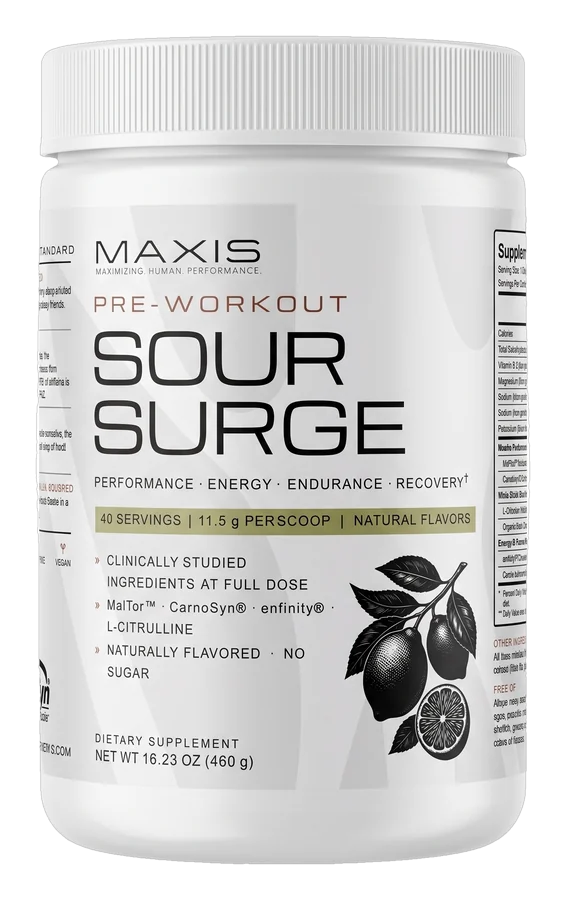
Featured in this article: MAXIS Paraxanthine Pre-Workout – Sour Surge. Each 1.5-scoop serving provides 150 mg enfinity® paraxanthine, 2,400 mg CarnoSyn® beta-alanine and 4,500 mg L-citrulline malate, with about 27 servings per tub and no sugar. See the full label and dosing →
Is pre-workout bad for you? Start with the stimulant
Caffeine, or a related stimulant, drives most pre-workouts and most of their side effects. The International Society of Sports Nutrition (ISSN) concludes that caffeine has consistently improved exercise performance at 3 to 6 mg per kilogram of body weight, and that the lowest effective dose may be closer to 2 mg/kg. For an 80 kg (176 lb) adult, 3 to 6 mg/kg works out to roughly 240 to 480 mg. Very high doses, around 9 mg/kg, were linked to a high rate of side effects without adding any performance benefit.
The FDA cites 400 mg a day for most adults. Too much caffeine can bring a faster heart rate, palpitations, jitters, an upset stomach, nausea, headache and disrupted sleep. The NIH Office of Dietary Supplements adds that heavy use, 500 mg a day or more, may reduce rather than improve performance, and that combining caffeine with other stimulants could raise the risk of side effects. People also react very differently, partly because of genetics and habitual intake.
One product category deserves a firm warning: pure or highly concentrated caffeine powder. The FDA estimates that toxic effects, including seizures, can occur with rapid intake of about 1,200 mg, which is less than half a teaspoon of pure caffeine. Never dose pure stimulant powder yourself.

Paraxanthine pre-workout: how enfinity® paraxanthine compares with caffeine
Paraxanthine is the main compound your liver makes from caffeine, and some pre-workouts now supply it directly. In a small 1986 study of six healthy men, its half-life was 3.1 hours, against 4.1 hours for caffeine. In a 90-day rat toxicology study, the highest dose with no observed adverse effects was 185 mg/kg for paraxanthine and 150 mg/kg for caffeine, and two animals died in the high-dose caffeine group, none with paraxanthine. The authors work for a contract research firm and the paraxanthine was supplied by a commercial producer, and human data are still limited, so we regard paraxanthine as what it is: a stimulant. Our guides What Is Paraxanthine? and Is Paraxanthine Safe? cover the evidence in more depth.
MAXIS Paraxanthine Pre-Workout provides 150 mg of enfinity® paraxanthine per 1.5-scoop serving, 100 mg in one scoop and 200 mg at the two-scoop daily maximum. No caffeine is added, but the cocoa bean extract can contain small amounts, so we do not call it caffeine-free. Count it alongside your coffee and energy drinks, as you would any caffeinated pre-workout.
Beta-alanine and citrulline: the tingle and the stomach
Beta-alanine causes the pins-and-needles feeling some people notice. The ISSN position stand describes this tingling, called paraesthesia, as the only reported side effect. It is dose-related, commonly appears above about 800 mg in a single dose, and can be reduced with smaller divided doses or sustained-release forms. The NIH notes that it usually affects the face, neck, backs of the hands and upper trunk, lasts 60 to 90 minutes and is not harmful. There are no safety data on use beyond one year. We explain the mechanism in Why Does Pre-Workout Make You Itch?
Citrulline malate has been studied before strength training. In one study the NIH describes, participants took 8 g an hour before bench pressing to exhaustion, and 6 of 41 reported stomach discomfort afterward. The NIH notes its safety has not been studied thoroughly.

Who should skip pre-workout
- Anyone under 18. Our label says so plainly.
- Pregnant, trying to conceive or breastfeeding. The FDA advises talking with your health care provider about whether to limit caffeine.
- People sensitive to stimulants.
- Anyone with a heart condition or high blood pressure, or who takes medication. Check with your doctor first.
- Late-evening trainers. In a study published in the Journal of Clinical Sleep Medicine, 400 mg of caffeine taken six hours before bed still cut measured sleep by more than an hour.
- Drug-tested athletes. The NIH notes that sports supplements are among those most often adulterated with undeclared ingredients. Our pre-workout carries no banned-substance certification, so check with your governing body.
How to read a pre-workout label
Dietary supplements do not need FDA review or approval before they are sold, so the label is your main safety tool. Look for these four things:
- Every ingredient with its own amount. A proprietary blend that shows only a total weight hides the stimulant dose.
- The stimulant per serving and at the daily maximum. Add it to your other caffeine for the day.
- A tolerance step. A sensible label tells you to start with a smaller serving and sets a maximum per 24 hours.
- Timing. Our label says 20 to 30 minutes before training. Our best time to take pre-workout guide explains how late is too late.
Where MAXIS Paraxanthine Pre-Workout fits
MAXIS Paraxanthine Pre-Workout – Sour Surge lists every dose. One 1.5-scoop serving (17.25 g) contains 150 mg enfinity® paraxanthine, 150 mg cocoa bean extract, 2,400 mg CarnoSyn® beta-alanine, 4,500 mg L-citrulline malate, 3,750 mg MalTor™ taurine-L-malic acid complex and 225 mg organic beet root powder. It supports energy, endurance and performance.† The label directs you to start with one scoop, take the full serving 20 to 30 minutes before training, and never exceed two scoops in 24 hours. The research above describes individual ingredients, not the finished MAXIS product. You will find it with our other training formulas in the Train collection.
Free US shipping on orders of $75 or more. Subscribe & Save: 10% off, and an extra 5% on 2+ subscribed items.
Pairs well with
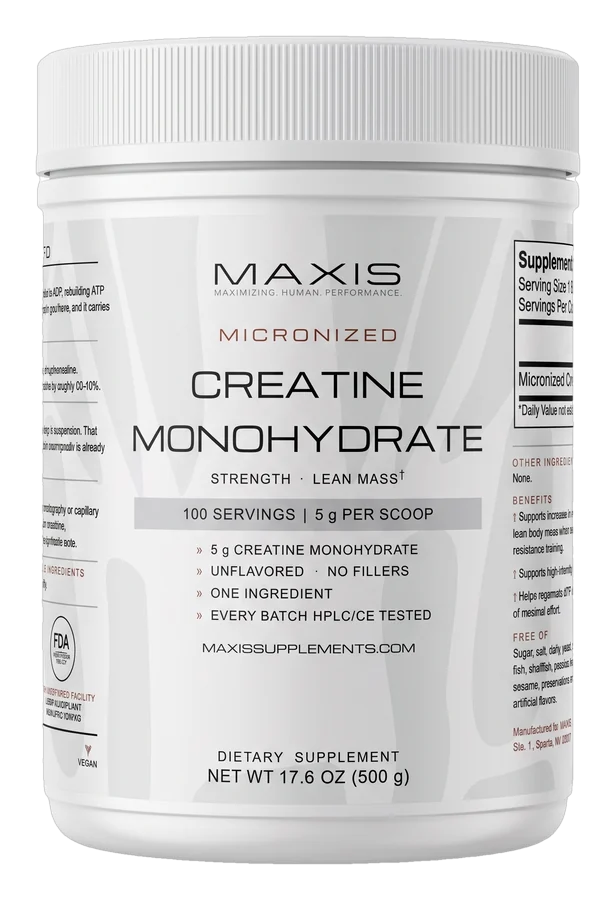
- MAXIS Micronized Creatine Monohydrate: there is no creatine in the pre-workout and no stimulant in the creatine, so the two don't overlap. Each scoop provides 5 g of creatine monohydrate, which supports increases in strength and lean body mass when combined with resistance training.† Take it any time of day.
- The Performance Stack brings the Paraxanthine Pre-Workout, Micronized Creatine Monohydrate and Hydrate electrolytes together in one order.
FAQ
What are the side effects of pre-workout?
Most come from the stimulant: jitters, a faster heart rate, an upset stomach, headache and poor sleep. Beta-alanine can cause a temporary skin tingle.
How much caffeine is too much in a pre-workout?
The FDA cites 400 mg a day for most adults, from all sources combined. Studies on performance used 3 to 6 mg per kilogram of body weight, and higher doses added side effects rather than benefits.
Can pre-workout affect your sleep?
Yes. In a sleep study, caffeine taken six hours before bed still reduced measured sleep by more than an hour.
How much paraxanthine is in one scoop of MAXIS Pre-Workout?
One scoop provides 100 mg, the full 1.5-scoop serving 150 mg and the two-scoop daily maximum 200 mg. See the full panel on the product page.
References
- U.S. Food and Drug Administration. Spilling the Beans: How Much Caffeine Is Too Much? fda.gov
- NIH Office of Dietary Supplements. Dietary Supplements for Exercise and Athletic Performance: Fact Sheet for Health Professionals. ods.od.nih.gov
- Guest NS, et al. (2021). International society of sports nutrition position stand: caffeine and exercise performance. Journal of the International Society of Sports Nutrition. PMC7777221
- Trexler ET, Smith-Ryan AE, Stout JR, et al. (2015). International Society of Sports Nutrition position stand: Beta-Alanine. Journal of the International Society of Sports Nutrition. Springer
- Lelo A, Birkett DJ, Robson RA, Miners JO (1986). Comparative pharmacokinetics of caffeine and its primary demethylated metabolites paraxanthine, theobromine and theophylline in man. British Journal of Clinical Pharmacology. doi:10.1111/j.1365-2125.1986.tb05246.x
- Szlapinski SK, Charrette A, Guthrie N, Hilmas CJ (2023). Paraxanthine safety and comparison to caffeine. Frontiers in Toxicology. frontiersin.org
- American Academy of Sleep Medicine (2013). Late afternoon and early evening caffeine can disrupt sleep at night (on Drake C, et al., Journal of Clinical Sleep Medicine). aasm.org
†These statements have not been evaluated by the Food and Drug Administration. This product is not intended to diagnose, treat, cure, or prevent any disease.
This article is for information only and isn’t medical advice. Talk to your doctor before starting a supplement, especially if you take medication or have a health condition.
Written by
MAXIS Team