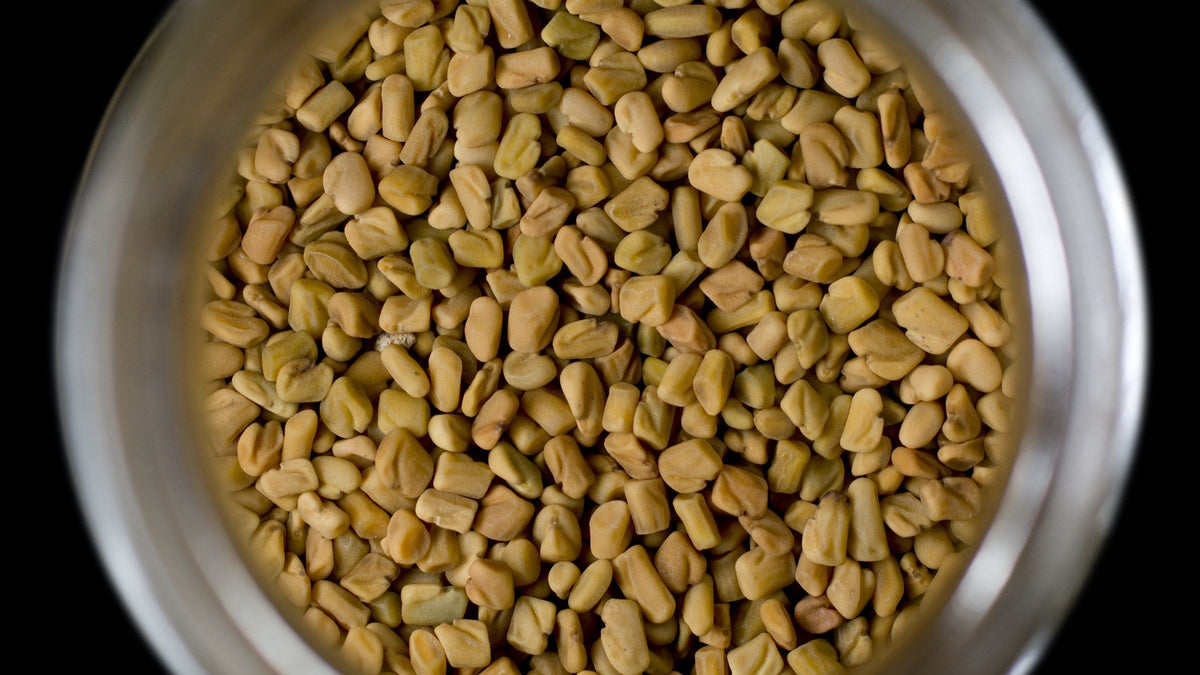
Testosurge® is a fenugreek seed extract made by Indus Biotech and standardized to at least 80% glycosides, and its one published human trial gave 500 mg a day for 8 weeks to resistance-trained men in their early twenties. That trial measured higher total testosterone than placebo, a small difference in body fat and no difference in strength between groups. Testosurge® fenugreek extract is the largest ingredient in MAXIS Men's Vitality, at the same 500 mg, so this guide explains what the name on the label means and what the research behind it did and did not show.
Key takeaways
- Testosurge® is a branded extract of fenugreek seed (Trigonella foenum-graecum), standardized to at least 80% marker glycosides.
- Its trial enrolled 30 resistance-trained men, about 21 years old, who took 500 mg or placebo daily for 8 weeks alongside supervised training four days a week.
- Total and bioavailable testosterone moved in favor of the extract; free testosterone, DHT, estrogen and strength did not differ between groups.
- The study was small, short and sponsored by the extract's maker, so it is a promising signal, not settled evidence.
What is Testosurge® fenugreek extract?
Testosurge® is a trademarked fenugreek seed extract from the ingredient maker Indus Biotech. Fenugreek is a legume whose seeds are a common spice; an extract concentrates selected compounds from those seeds so that each batch delivers a stated amount of them. The ingredient supplier lists Testosurge® as standardized to at least 80% marker glycosides, described as a steroidal and flavonoid glycoside complex, with 500 mg as its dose.
The brand name matters because fenugreek extracts are not interchangeable. Different makers concentrate different fractions of the seed, to different percentages, and trials of one extract do not automatically apply to another. If you want the wider picture across all fenugreek extracts, our review Fenugreek and Testosterone covers the meta-analyses.
What does "standardized to 80% glycosides" mean on a label?
It means at least 80% of the extract's weight is the glycoside fraction the maker measures, so 500 mg of Testosurge® supplies about 400 mg of glycosides. That is the figure to look for: a plain "fenugreek 500 mg" line tells you the weight of the powder, not how much of the measured compounds it contains, and plain seed powder is far less concentrated.
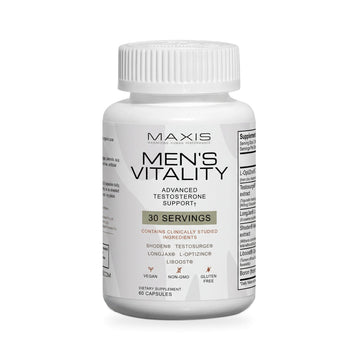
On the Men's Vitality label, the line reads 500 mg Testosurge® fenugreek seed extract, standardized to 80% (400 mg) glycosides, per two-capsule serving. Both numbers are printed, so you can compare the dose directly with the 500 mg used in the trial below.

What did the Testosurge® trial measure in 8 weeks?
In 30 resistance-trained men averaging about 21 years old, 500 mg of Testosurge® a day for 8 weeks was associated with higher total and bioavailable testosterone than placebo. The trial, run by Poole, Wilborn and colleagues, was double-blind: 17 men took the extract and 13 took a placebo capsule of the same size, and all of them followed the same supervised, periodized program of four resistance-training sessions a week. It was first presented as a 2009 conference abstract that names TESTOSURGE, and the full paper published in 2010 reports the same results.
Over the 8 weeks, total testosterone rose by an average of 0.97 ng/mL in the Testosurge® group and fell by 2.10 ng/mL in the placebo group. Bioavailable testosterone rose by 1.32 ng/mL with the extract and fell by 1.69 ng/mL with placebo. Body fat fell by 1.77 percentage points with the extract against 0.55 points with placebo. All three differences reached statistical significance.
Bench press and leg press strength, and lean body mass, increased in both groups over time, which is what you would expect from eight weeks of structured training. Those changes were not different between the extract and placebo groups.
What the Testosurge® trial did not show
The trial did not show changes in free testosterone, DHT or estrogen between groups, and it did not show a strength advantage. Part of the testosterone difference also came from the placebo group's levels falling during hard training, not only from the extract group's rising.
Three more limits are worth knowing. The study was small, with 30 men finishing. It lasted 8 weeks, so it says nothing about long-term use. And the abstract states that it was sponsored by Indus Biotech, the extract's maker. None of this makes the result wrong, but it is one trial in one group of young, trained men, and it needs independent repetition. The research describes the ingredient on its own, not the finished MAXIS product. For how this compares with other common ingredients, see Do Testosterone Boosters Work?
Is Testosurge® fenugreek extract safe? Side effects and who should skip it
Testosurge® raised no safety-lab concerns in its 8-week trial: routine blood tests, including lipids, liver and kidney markers and blood counts, showed no significant differences between groups. That is reassuring for a short period in healthy young men, but it is not long-term safety data.
For fenugreek in general, the NIH's National Center for Complementary and Integrative Health lists diarrhea, nausea and other digestive symptoms as possible side effects, notes that large doses may cause a harmful drop in blood sugar, and warns that fenugreek can cause allergic reactions, some of them serious. It is not considered safe during pregnancy in amounts above those found in food. Fenugreek is a legume, so people allergic to peanuts or other legumes should check with a doctor first, and anyone taking medication, including blood-sugar-lowering medication, should ask a doctor or pharmacist before use.
Where MAXIS Men's Vitality fits: Testosurge®, LongJax®, Shoden®, L-OptiZinc® and Liboost®
MAXIS Men's Vitality contains 500 mg Testosurge® fenugreek seed extract, 200 mg LongJax® long jack root extract, 120 mg Shoden® ashwagandha root extract, 100 mg Liboost® damiana leaf extract, 15 mg zinc as L-OptiZinc® and 3 mg boron per two-capsule serving. Men's Vitality supports healthy testosterone levels already within the normal range.† The Testosurge® amount matches the daily dose in the trial above. We have not found a published trial of LongJax® itself, and no human trial of Liboost® has been published in a journal, so we make no claim for it.
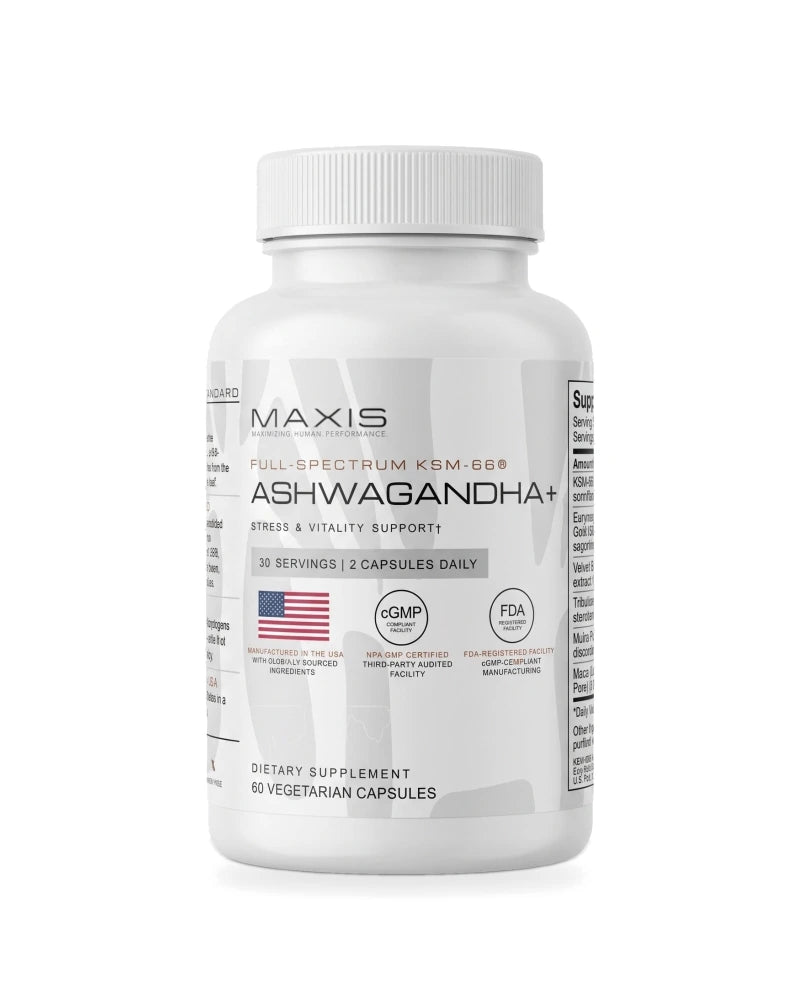
The label directs adults to take two capsules daily, an hour before physical activity or bedtime, and each bottle holds 30 servings. Do not combine it with Ashwagandha+, which also contains ashwagandha and tongkat ali, or with a separate zinc supplement, since the 15 mg here counts toward the 40 mg adult upper limit. It sits in our men's health supplements, and the full panel is on the Men's Vitality product page.
Free US shipping on every order. Subscribe & Save: 15% off, and an extra 5% on 2+ subscribed items.
Pairs well with
Creatine is the first product we would pair with Men's Vitality, because the Testosurge® trial ran alongside resistance training and the two formulas share no ingredients.
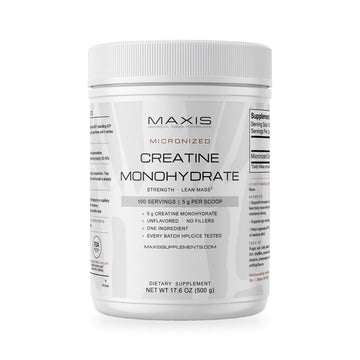
- MAXIS Micronized Creatine Monohydrate: creatine for strength training, 5 g a day, any time.
- MAXIS Vitamin D3 + K2 (MK-7): vitamin D3 with K2, a daily basic Men's Vitality does not include.
FAQ
What is Testosurge®?
Testosurge® is a fenugreek seed extract from Indus Biotech, standardized to at least 80% glycosides. It is an ingredient, not a finished product, so it appears inside formulas such as Men's Vitality.
How much Testosurge® per day was studied?
The published trial used 500 mg once a day for 8 weeks. That is the same amount as one two-capsule serving of Men's Vitality.
How long does fenugreek extract take to work?
The Testosurge® trial measured hormones at 4 and 8 weeks, and the reported changes were over the full 8 weeks. There is nothing to feel on day one, because fenugreek is not a stimulant.
Is Testosurge® the same as fenugreek seed powder?
No. It is a concentrated extract with a stated glycoside content, while seed powder is the whole ground seed. Results from one extract should not be assumed for plain powder or for other branded extracts.
References
- Poole C, Bushey B, Pena E, et al. (2009). Effects of TESTOSURGE supplementation on strength, body composition and hormonal profiles during an 8-week resistance training program. Journal of the International Society of Sports Nutrition 6(Suppl 1):P12. doi:10.1186/1550-2783-6-S1-P12
- Wilborn C, Taylor L, Poole C, Foster C, Willoughby D, Kreider R (2010). Effects of a purported aromatase and 5α-reductase inhibitor on hormone profiles in college-age men. International Journal of Sport Nutrition and Exercise Metabolism. PubMed 21116018
- National Center for Complementary and Integrative Health (2025). Fenugreek. National Institutes of Health. nccih.nih.gov
- NXT Ingredients. TestoSurge® by Indus Biotech: ingredient specification. nxtingredients.com
- National Institutes of Health, Office of Dietary Supplements. Zinc: Fact Sheet for Health Professionals. ods.od.nih.gov
†These statements have not been evaluated by the Food and Drug Administration. This product is not intended to diagnose, treat, cure, or prevent any disease.
This article is for information only and isn’t medical advice. Talk to your doctor before starting a supplement, especially if you take medication or have a health condition.
Written by
Kevin Matthews ran track at The College of New Jersey and edits the MAXIS Journal. Every article is researched by the MAXIS editorial team, and every figure links to its source.
How the Journal works