
Most testosterone boosters do not work the way their labels suggest: in a 2020 review of 50 popular products, 90% claimed to boost testosterone, but only 24.8% of those claims had supporting research. So do testosterone boosters work at all? A few ingredients, such as standardized fenugreek, tongkat ali and ashwagandha, have small human trials with modest results, and those are the ingredients MAXIS Men's Vitality is built on, with every dose on the label.
Key takeaways
- In a review of 50 "testosterone booster" products, 61.5% of ingredient claims had no testosterone studies at all, and 10.1% had data pointing the other way.
- Standardized fenugreek, tongkat ali (long jack) and ashwagandha root extract have small human trials showing modest changes in specific groups of men.
- In one zinc study, testosterone fell when young men's zinc intake was restricted and rose when older men with marginal zinc status took zinc.
- Sleep matters too: about a week of short sleep lowered daytime testosterone by 10% to 15% in 10 healthy young men.
Do testosterone boosters work? What a review of 50 products found
Most do not, judged against their own label claims. Clemesha and colleagues searched Google for "testosterone booster," took the first 50 products and checked all 109 ingredients against the published research. Ninety percent of the products claimed to boost testosterone, yet only 24.8% of the claims had data showing an increase, 61.5% had no testosterone studies at all, and 10.1% had data suggesting a decrease. Two products contained zinc at or above the 40 mg adult upper limit.
That does not make every ingredient useless. It means the claim on the front of the bottle tells you little, and the useful question is which ingredients were tested in people, at what dose, and in whom.
Which testosterone booster ingredients have human trials?
Fenugreek, tongkat ali, ashwagandha and zinc have the most human data, and each result applies to a specific group of men. The research below describes individual ingredients, not any finished MAXIS product.
Fenugreek. A 2023 meta-analysis by Isenmann and colleagues pooled 7 studies with 449 participants and found a small increase in total testosterone in male athletes taking fenugreek extract, compared with placebo. The change in free testosterone was not statistically significant. Our full review is in Fenugreek and Testosterone.
Tongkat ali (long jack). A 2022 meta-analysis by Leisegang and colleagues pooled five randomized trials, using 100 to 600 mg a day, and found higher total testosterone with Eurycoma longifolia than with placebo. In the subgroup of men whose levels were already within the normal range, the change was not statistically significant. Doses and cautions are in Tongkat Ali Dosage.
Ashwagandha. In a 16-week crossover trial of 57 overweight men aged 40 to 70, Lopresti and colleagues found that 8 weeks of a Shoden® ashwagandha extract supplying 21 mg of withanolide glycosides a day was linked to a 14.7% greater rise in testosterone and an 18% greater rise in DHEA-S than placebo. Fatigue and vigor improved in both groups, with no significant difference between them.
Zinc. In a 1996 study by Prasad and colleagues, serum testosterone fell from 39.9 to 10.6 nmol/L in four healthy young men whose dietary zinc was restricted for 20 weeks, and it rose from 8.3 to 16.0 nmol/L in nine older men with marginal zinc status who took zinc for six months. Zinc and boron both have adult upper limits; see Boron for Men for the boron evidence.
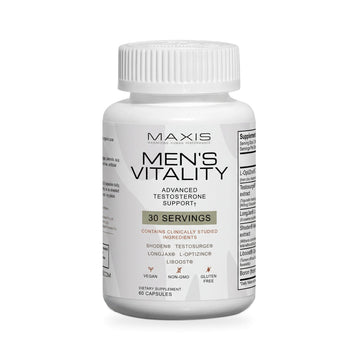
Dose is where labels differ most. Men's Vitality uses 500 mg of fenugreek extract standardized to 80% glycosides and 120 mg of Shoden® ashwagandha extract supplying 42 mg of withanolide glycosides, so each amount can be compared with the research above.

Which popular ingredients have weak or contrary evidence?
D-aspartic acid is the clearest example of a popular ingredient with contrary data. In a 2015 randomized, placebo-controlled trial by Melville and colleagues, 24 resistance-trained men took a placebo, 3 g or 6 g of D-aspartic acid a day for 14 days. The 3 g dose produced no significant change, and the 6 g dose lowered both total and free testosterone.
Many formulas also load vitamins and minerals far beyond recommended intakes. If you already get enough, extra amounts are unlikely to change testosterone, and zinc above 40 mg a day from all sources exceeds the adult upper limit. Herbs with only animal or traditional-use data have simply not been tested for testosterone in people.
What else affects testosterone levels?
Sleep is one well-documented factor outside the supplement aisle. In a 2011 study by Leproult and Van Cauter, 10 healthy young men who slept under five hours a night for about a week had daytime testosterone 10% to 15% lower than after full nights of sleep.
If something feels off, get a blood test before buying anything. The Endocrine Society's guideline says testosterone should be measured in a fasting blood sample on two separate mornings and read alongside symptoms and signs. Check with a doctor first if you take prescription medication or have a hormone-sensitive condition such as prostate cancer.
How to read a testosterone support supplement label
A good testosterone support supplement label lets you match every ingredient and dose to a human study. Look for:
- Every dose listed. A proprietary blend hides individual amounts, so you cannot compare it with the research.
- The extract and its standardization. Trials used concentrated, standardized extracts, so "fenugreek 500 mg" means little without the glycoside percentage.
- Doses in the studied range. An ingredient at a fraction of the trial dose is unlikely to match the trial.
- Minerals added up. Count zinc and boron across every product you take.
- Plain claims. Supplements may only make structure-function claims, so dramatic promises are a red flag.
Where MAXIS Men's Vitality fits: Testosurge®, LongJax®, Shoden®, L-OptiZinc® and Liboost®
MAXIS Men's Vitality contains 500 mg Testosurge® fenugreek seed extract, 200 mg LongJax® long jack (tongkat ali) root extract, 120 mg Shoden® ashwagandha root extract, 100 mg Liboost® damiana leaf extract, 15 mg zinc as L-OptiZinc® and 3 mg boron per two-capsule serving. Men's Vitality supports healthy testosterone levels already within the normal range.† We have not found a published trial of LongJax® itself, and no human trial of Liboost® has been published in a journal, so we make no claim for it.
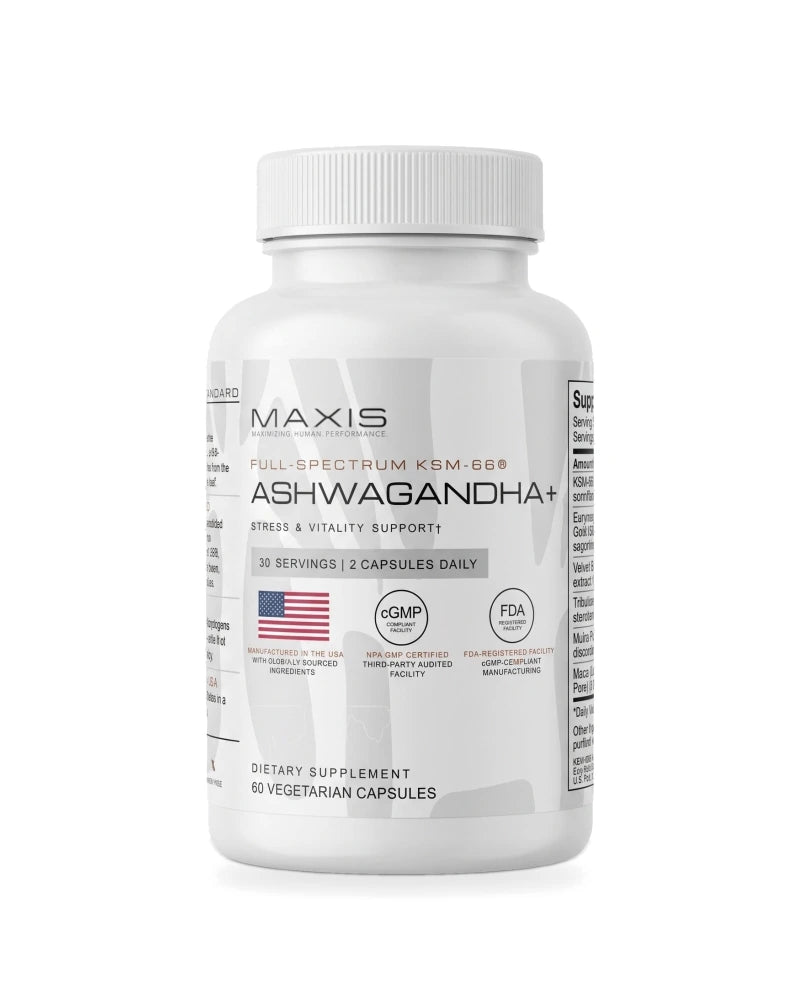
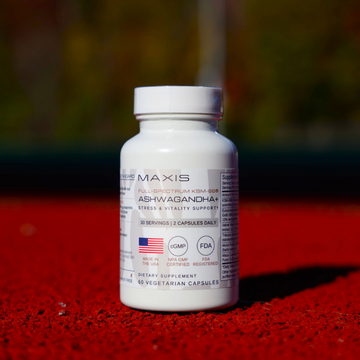
The label directs adults to take two capsules daily, an hour before physical activity or bedtime. The 15 mg of zinc sits under the 40 mg adult upper limit, so don't add a separate zinc supplement, and don't combine it with Ashwagandha+, which also contains ashwagandha and tongkat ali. It is part of our men's health supplements.
Free US shipping on every order. Subscribe & Save: 15% off, and an extra 5% on 2+ subscribed items.
Pairs well with
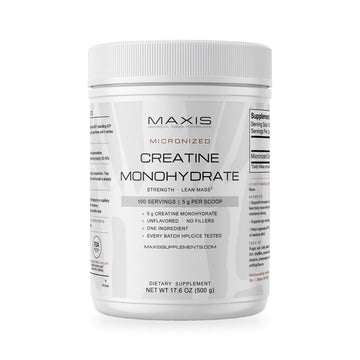
- MAXIS Micronized Creatine Monohydrate: creatine for strength training, 5 g a day, any time, with no ingredients that overlap Men's Vitality.
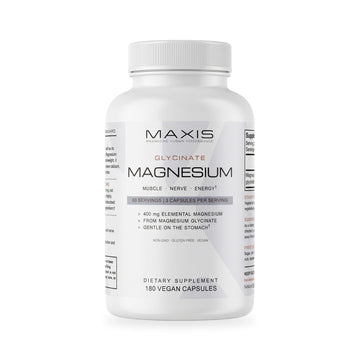
- MAXIS Magnesium Glycinate: magnesium takes part in muscle function and energy metabolism.†
Related reading
FAQ
Do testosterone boosters actually work?
Most do not live up to their label claims. In a review of 50 products, only 24.8% of testosterone claims had supporting data, while a few ingredients, such as standardized fenugreek and tongkat ali, showed modest changes in small trials.
How long do testosterone boosters take to work?
Most trials measured results over weeks, not days. The Shoden® ashwagandha trial measured hormones after 8 weeks, and the tongkat ali trials in the 2022 meta-analysis ran from 3 days to 6 months.
Are testosterone boosters safe?
Safety depends on the ingredient and dose: 6 g a day of D-aspartic acid lowered testosterone in one trial. Check minerals against upper limits, and ask a doctor first if you take medication or have a hormone-sensitive condition.
Can I take Men's Vitality with other supplements?
Yes, with two exceptions: skip a separate zinc supplement and Ashwagandha+, because the ingredients overlap. Men's Vitality has no stimulants, so it fits alongside creatine or magnesium.
References
- Clemesha CG, Thaker H, Samplaski MK (2020). 'Testosterone Boosting' Supplements Composition and Claims Are not Supported by the Academic Literature. World Journal of Men's Health. doi:10.5534/wjmh.190043
- Isenmann E, Alisauskas P, Flenker U, Schalla J, Diel P (2023). The Anabolic Effect of Fenugreek: A Systematic Review with Meta-analysis. International Journal of Sports Medicine. doi:10.1055/a-2048-5925
- Leisegang K, Finelli R, Sikka SC, Panner Selvam MK (2022). Eurycoma longifolia (Jack) Improves Serum Total Testosterone in Men: A Systematic Review and Meta-Analysis of Clinical Trials. Medicina. doi:10.3390/medicina58081047
- Lopresti AL, Drummond PD, Smith SJ (2019). A Randomized, Double-Blind, Placebo-Controlled, Crossover Study Examining the Hormonal and Vitality Effects of Ashwagandha (Withania somnifera) in Aging, Overweight Males. American Journal of Men's Health. doi:10.1177/1557988319835985
- Prasad AS, Mantzoros CS, Beck FW, Hess JW, Brewer GJ (1996). Zinc status and serum testosterone levels of healthy adults. Nutrition. PubMed 8875519
- Melville GW, Siegler JC, Marshall PWM (2015). Three and six grams supplementation of d-aspartic acid in resistance trained men. Journal of the International Society of Sports Nutrition. doi:10.1186/s12970-015-0078-7
- Leproult R, Van Cauter E (2011). Effect of 1 Week of Sleep Restriction on Testosterone Levels in Young Healthy Men. JAMA. CDC Stacks record; study summary: ScienceDaily
- Bhasin S, Brito JP, Cunningham GR, et al. (2018). Testosterone Therapy in Men With Hypogonadism: An Endocrine Society Clinical Practice Guideline. Journal of Clinical Endocrinology and Metabolism. doi:10.1210/jc.2018-00229
†These statements have not been evaluated by the Food and Drug Administration. This product is not intended to diagnose, treat, cure, or prevent any disease.
This article is for information only and isn’t medical advice. Talk to your doctor before starting a supplement, especially if you take medication or have a health condition.
Written by
Kevin Matthews ran track at The College of New Jersey and edits the MAXIS Journal. Every article is researched by the MAXIS editorial team, and every figure links to its source.
How the Journal works