In randomized trials of healthy men, ashwagandha raised testosterone more than placebo: 600 mg a day of KSM-66® for 8 weeks lifted serum testosterone by 96.2 ng/dL versus 18.0 ng/dL with placebo in 57 young men who were starting to lift.1 That 600 mg daily amount is exactly what two capsules of MAXIS Ashwagandha+, a 600 mg KSM-66® ashwagandha formula deliver. A 2026 meta-analysis of 23 randomized trials backs the pattern, finding testosterone in men 57.43 ng/dL higher with ashwagandha.5 Here is what each trial measured, and the dose behind it.
Key takeaways
- Ashwagandha has raised testosterone in healthy men in several randomized trials, from young lifters to men aged 40 to 70.
- The most-cited result comes from KSM-66® at 600 mg a day, which also produced bigger strength gains than placebo over 8 weeks.
- A 2026 meta-analysis of 23 trials found higher testosterone in men and lower cortisol across trials.
- Results built over 8 weeks or more of daily use, so consistency is what counts.
What should you look for in an ashwagandha supplement?
Look for a named, standardized root extract at the dose its trials used, with every amount on the label.
- A named extract. The testosterone trials each tested a specific standardized extract, so a brand name ties the ingredient to its research.12
- The trial dose. The KSM-66® trial that measured testosterone used 300 mg twice daily, 600 mg a day.1
- Standardization you can check. KSM-66® is a root extract standardized to 5% withanolides, per the trial's methods.1
- Every amount disclosed. No proprietary blend, so you can match each ingredient to its research.
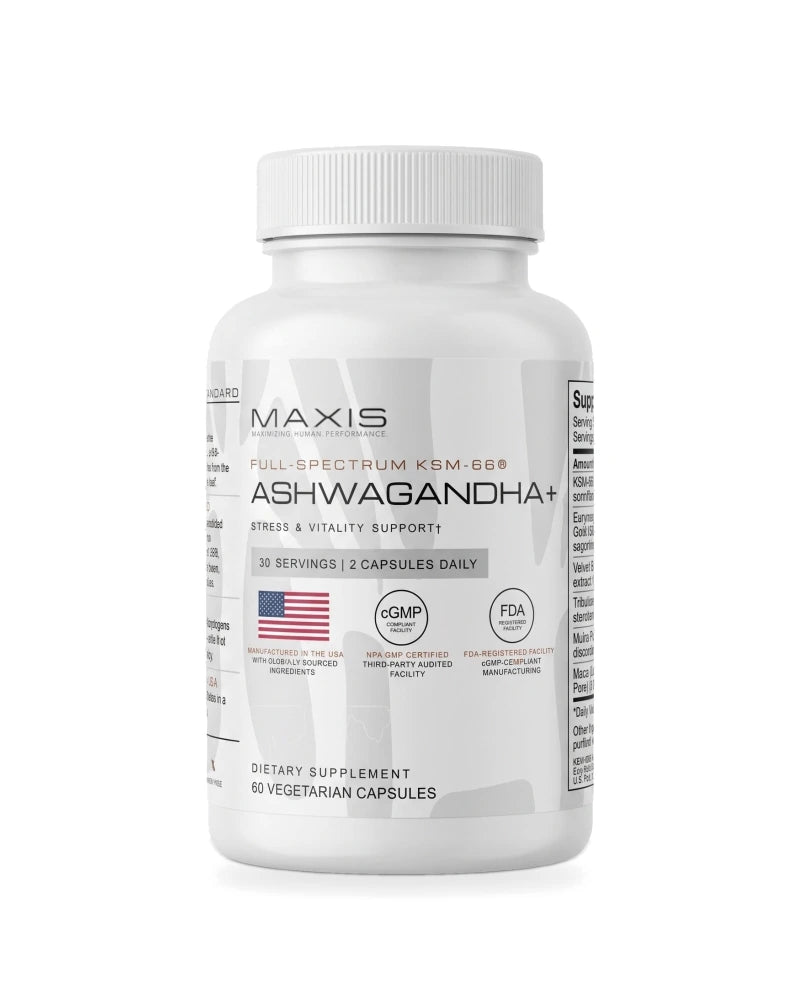
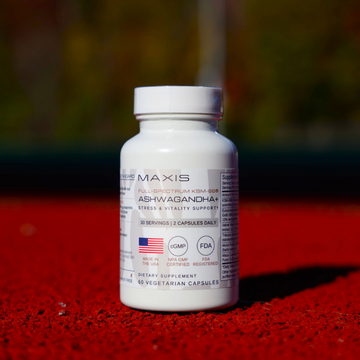
MAXIS Ashwagandha+ meets each of these: 600 mg of root-only KSM-66® ashwagandha per two-capsule serving, the amount used in the testosterone trial above, plus 400 mg Eury Gold 28® tongkat ali, with every botanical's amount printed and no proprietary blends.
What the research shows: ashwagandha testosterone trials
Five human studies, from a single 8-week trial to a 23-trial meta-analysis, tracked testosterone and related hormones with ashwagandha.
| Study (lead author, year) | Who was studied | Dose | Length | What was measured |
|---|---|---|---|---|
| Wankhede, 20151 | 57 healthy men aged 18 to 50, new to resistance training | KSM-66®, 300 mg twice daily | 8 weeks | Serum testosterone up 96.2 ng/dL vs. 18.0 ng/dL with placebo (p = 0.004); bench press up 46.0 kg vs. 26.4 kg |
| Lopresti, 20192 | 57 overweight men aged 40 to 70; 43 completed both periods | Standardized extract, 21 mg withanolide glycosides a day | 8 weeks per crossover period | Salivary testosterone 14.7% and DHEA-S 18.0% higher than during placebo |
| Lopresti, 20193 | 60 stressed, healthy men and women | Standardized extract, 240 mg a day | 60 days | Morning cortisol fell more than with placebo; testosterone in men rose over time (within-group) |
| Vaidya, 20254 | 42 healthy adults aged 50 to 70, mostly men; 40 completed | Root extract, 200 mg twice daily | 180 days | Testosterone up 15.7% in men taking ashwagandha; no adverse effects reported |
| Fornalik, 20265 | Meta-analysis of 23 randomized trials, 1,706 participants | Various extracts and doses | Various | Testosterone in men 57.43 ng/dL higher; cortisol lower (SMD −1.18) |

Ashwagandha and testosterone: what the trials in healthy men measured
Across trials in healthy men of different ages, ashwagandha was followed by larger testosterone increases than placebo, alongside gains in strength and lower stress hormones.
Young men who lift. In a 2015 randomized trial led by Sachin Wankhede, published in the Journal of the International Society of Sports Nutrition, 57 healthy men aged 18 to 50 with little lifting experience took 300 mg of KSM-66® twice daily or placebo for 8 weeks while following the same training program.1 Testosterone rose 96.2 ng/dL with ashwagandha versus 18.0 ng/dL with placebo, a significantly greater increase. The same men gained 46.0 kg on the bench press versus 26.4 kg. The measured finding is the size of the rise: average end-of-study levels (726 vs. 693 ng/dL) were not statistically different between groups.
Men aged 40 to 70. In a 2019 crossover trial led by Adrian Lopresti of Murdoch University, published in the American Journal of Men's Health, overweight men aged 40 to 70 had 14.7% higher salivary testosterone and 18.0% higher DHEA-S during 8 weeks on a standardized ashwagandha extract than during 8 weeks on placebo.2
Older adults over six months. In a 180-day trial published in Food Science & Nutrition in December 2025 and led by Narendra Vaidya, healthy adults aged 50 to 70, mostly men, took 400 mg a day of a root extract, and testosterone in the men rose 15.7%.4
The big picture. A 2026 systematic review and meta-analysis led by M. Fornalik in Planta Medica pooled 23 randomized trials with 1,706 participants and found testosterone 57.43 ng/dL higher in men, with no change in women, plus lower cortisol overall.5 The authors noted possible dose-response effects tied to withanolide content. For strength, stress and sleep results in men, see Ashwagandha Benefits for Men.
How does ashwagandha affect cortisol and strength?
Ashwagandha lowered cortisol and boosted strength gains in trials, two results that sit right alongside the testosterone findings.
In 60 stressed, healthy adults taking 240 mg of a standardized extract for 60 days, morning cortisol dropped more than with placebo (p < .001), and testosterone in the men rose over the study period.3 The 2026 meta-analysis also found a large pooled drop in cortisol across trials.5 In training men, the strength effect holds up too: in the 2018 STAR trial led by Tim Ziegenfuss in Nutrients, 38 recreationally active men taking 500 mg a day of a root-and-leaf water extract for 12 weeks added 19.1 kg to their squat versus 10.0 kg with placebo.6
How much ashwagandha per day for testosterone, and how long does it take?
The KSM-66® testosterone trial used 600 mg a day, taken as 300 mg twice daily, and measured results after 8 weeks.1
Two capsules of Ashwagandha+ deliver that same 600 mg of KSM-66® in one daily serving. Other extracts were studied at their own doses, 240 to 400 mg a day.34 The trials measured hormone changes after 8 weeks to 6 months of steady daily use. For a week-by-week view, read How Long Does Ashwagandha Take to Work?

Is ashwagandha safe for men? Side effects and who should skip it
Ashwagandha is well tolerated for up to about 3 months of use, according to the NIH, and a few groups should skip it or ask a clinician first.7
- Common side effects. Usually mild: stomach upset, loose stools, nausea and drowsiness. Long-term safety is not known.7
- Liver. Liver injury is rare; in reported cases it appeared 2 to 12 weeks after starting and usually resolved within 1 to 4 months of stopping.8 Stop and see a clinician if your skin or eyes turn yellow.
- Hormone-sensitive conditions. Because ashwagandha might raise testosterone, experts cited by the NIH advise men with hormone-sensitive prostate cancer to avoid it.7
- Who should skip it. Anyone under 18, pregnant or breastfeeding.
- Talk to your clinician first if you have a thyroid, autoimmune or hormone-sensitive condition (including prostate concerns), take prescription medication (Ashwagandha+ contains L-Dopa from velvet bean), or have surgery within two weeks.
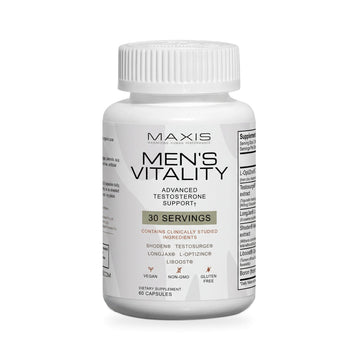
Do not combine Ashwagandha+ with MAXIS Men's Vitality, which also contains ashwagandha and long jack. More in Ashwagandha Side Effects.
Where MAXIS Ashwagandha+ fits: KSM-66® and Eury Gold 28®

MAXIS Ashwagandha+ contains 600 mg KSM-66® ashwagandha and 400 mg Eury Gold 28® tongkat ali per two-capsule serving. That is root-only KSM-66® at the daily amount used in the Wankhede testosterone and strength trial, plus velvet bean, tribulus, muira puama and maca, each at a disclosed amount. Ashwagandha+ helps the body adapt to stress and supports energy, stamina and healthy hormone balance.† Take two capsules daily, and do not exceed two capsules a day. For the full ingredient story, read What Is KSM-66 Ashwagandha? and The Ashwagandha Guide, or browse our Men's Health collection.
Free US shipping on every order. Subscribe & Save: 15% off every delivery, and an extra 5% on 2+ subscribed items.
Pairs well with
The natural partners for Ashwagandha+ are a training-day pre-workout and creatine.
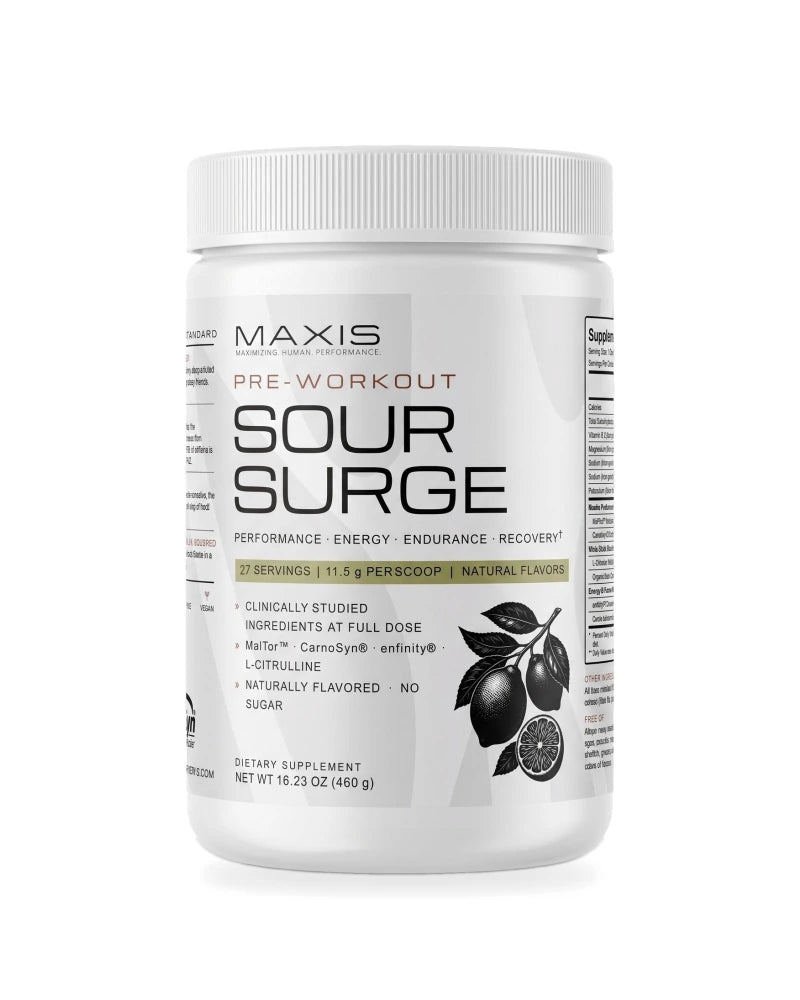
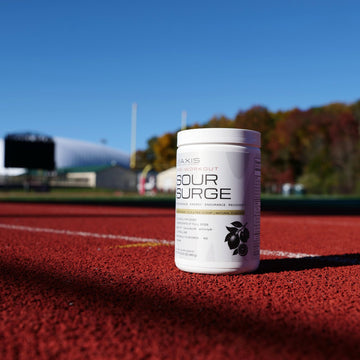
- MAXIS Paraxanthine Pre-Workout – Sour Surge: 150 mg enfinity® paraxanthine, 2,400 mg CarnoSyn® beta-alanine and 4,500 mg L-citrulline malate per 1.5-scoop serving. Supports energy, endurance and performance.† Together with Ashwagandha+ it makes the Day & Night Stack.
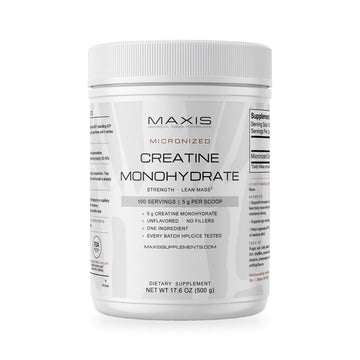
- MAXIS Micronized Creatine Monohydrate: 5 g per scoop. Supports increases in strength and lean body mass when combined with resistance training.†
FAQ
Does ashwagandha increase testosterone?
Yes, in trials of healthy men. Testosterone rose 96.2 ng/dL with 600 mg of KSM-66® a day versus 18.0 ng/dL with placebo over 8 weeks, and a 2026 meta-analysis of 23 trials found higher testosterone in men.
How long does ashwagandha take to work for testosterone?
Weeks of daily use. The trials measured changes after 8 weeks to 6 months, so take it consistently at the same time each day.
How much ashwagandha should I take for testosterone?
The KSM-66® trial that measured testosterone used 600 mg a day, split into two 300 mg doses. Two capsules of Ashwagandha+ provide that 600 mg in one serving.
Does ashwagandha raise testosterone in women?
No, not in the pooled data. The 2026 meta-analysis found higher testosterone in men but no meaningful change in women.
Edited by Kevin Matthews. Researched by the MAXIS editorial team; every figure links to its source below. Last reviewed November 24, 2026.
References
- Wankhede S, Langade D, Joshi K, et al. Examining the effect of Withania somnifera supplementation on muscle strength and recovery: a randomized controlled trial. J Int Soc Sports Nutr. 2015;12:43. doi:10.1186/s12970-015-0104-9 (PMID: 26609282)
- Lopresti AL, Drummond PD, Smith SJ. A randomized, double-blind, placebo-controlled, crossover study examining the hormonal and vitality effects of ashwagandha (Withania somnifera) in aging, overweight males. Am J Mens Health. 2019;13(2):1557988319835985. doi:10.1177/1557988319835985 (PMID: 30854916)
- Lopresti AL, Smith SJ, Malvi H, et al. An investigation into the stress-relieving and pharmacological actions of an ashwagandha (Withania somnifera) extract: a randomized, double-blind, placebo-controlled study. Medicine (Baltimore). 2019;98(37):e17186. doi:10.1097/MD.0000000000017186 (PMID: 31517876)
- Vaidya N, Agarwal R, Kshirsagar P, et al. Safety and tolerability of Withania somnifera root extract in healthy male participants: a pilot randomized, double-blind, placebo-controlled clinical trial. Food Sci Nutr. 2026;14(1):e71388. doi:10.1002/fsn3.71388 (PMID: 41458530)
- Fornalik M, Malkiewicz A, Adamczak D, et al. Hormonal modulation with Withania somnifera: systematic review and meta-analysis of randomized-controlled trials. Planta Med. 2026;92(8):790-805. doi:10.1055/a-2802-8363 (PMID: 41740946)
- Ziegenfuss TN, Kedia AW, Sandrock JE, et al. Effects of an aqueous extract of Withania somnifera on strength training adaptations and recovery: the STAR trial. Nutrients. 2018;10(11):1807. doi:10.3390/nu10111807
- NIH Office of Dietary Supplements. Ashwagandha: Fact Sheet for Health Professionals. Updated May 2, 2025. Accessed November 24, 2026. ods.od.nih.gov
- National Institute of Diabetes and Digestive and Kidney Diseases. Ashwagandha. In: LiverTox: Clinical and Research Information on Drug-Induced Liver Injury. Updated December 3, 2024. Accessed November 24, 2026. ncbi.nlm.nih.gov
KSM-66® is a registered trademark of Ixoreal Biomed Inc. Eury Gold 28® is a registered trademark of HP Ingredients. U.S. Patent: 7,132,117 — Bioactive Fraction of Eurycoma Longifolia. All other trademarks are property of their respective owners.
Natural Alternatives International (NAI) is the owner of patents as listed on www.carnosyn.com and the registered trademark CarnoSyn®. MalTor™ is a trademark of Nutriscience Innovations LLC. enfinity® is a registered trademark of enfinity energy LLC, Texas, USA.
†These statements have not been evaluated by the Food and Drug Administration. This product is not intended to diagnose, treat, cure, or prevent any disease.
This article is for information only and isn’t medical advice. Talk to your doctor before starting a supplement, especially if you take medication or have a health condition.
Written by
Kevin Matthews ran track at The College of New Jersey and edits the MAXIS Journal. Every article is researched by the MAXIS editorial team, and every figure links to its source.
How the Journal works