
Fig.00 — Product


Grass-Fed Whey Protein (Vanilla)
$39.99$64.99
Fig.01 — Overview
Grass-Fed Whey Protein (Vanilla)
GRASS-FED WHEY CONCENTRATE + ISOLATE · 19G PROTEIN · NATURAL VANILLA · 14 SERVINGS
A blend of grass-fed whey concentrate and ion-exchange whey isolate, sweetened naturally with stevia and monk fruit. 19g of complete protein per 24g scoop, with the full essential amino acid profile your body needs for muscle protein synthesis. No added sugar, no artificial sweeteners, no synthetic hormones.
Form
Powder
Servings
14
Protein
19g
Flavor
Natural Vanilla
⚠ Contains:Contains milk and dairy. Contains soy lecithin (less than 1% of formula, present for mixability). No yeast, wheat, gluten, corn, preservatives, or artificial colors or flavors. Non-GMO. rBGH free.
Great for
- Adults supplementing daily protein intake
- Resistance training and muscle recovery
- Anyone falling short of the 0.7–1g per pound bodyweight target
- Post-workout recovery shakes
- Mixing into oatmeal, smoothies, or yogurt
Not ideal for
- Anyone with milk or dairy allergies
- Strict vegans (this is a dairy-derived protein)
- Those with severe lactose intolerance (whey concentrate contains residual lactose)
- Children under 18 without parental and pediatric guidance
Grass Fed
Non-GMO
rBGH Free
Made Under cGMP
FDA-Registered Facility
Fig.02 — What's Inside
Every active. Every dose.
NO PROPRIETARY BLENDS · NO HIDDEN AMOUNTS
Whey Protein Concentrate
Grass-fed, ion-exchange ultra-filtered
—
Whey Protein Isolate
Grass-fed, ion-exchange ultra-filtered
—
Total Protein Per Serving
Combined whey concentrate + isolate
19g
Natural Vanilla Flavor
Inactive ingredient
—
Stevia (Sweta™)
Inactive ingredient — natural sweetener
—
Monk Fruit Extract
Inactive ingredient — natural sweetener
—
Silica
Inactive ingredient
—
Soy Lecithin
Inactive ingredient (under 1%)
—
Two whey sources for two reasons. Whey concentrate retains the immune-supporting bioactives that get filtered out of pure isolates. Whey isolate adds protein density without the sugar or fat. Together they deliver complete protein with everything the dairy naturally provides.
8Active
ingredients
ingredients
0Proprietary
blends
blends
100%Doses
disclosed
disclosed
Fig.03 — Standards
How it's made
FDA-REGISTERED FACILITY · cGMP · IDENTITY VERIFIED · SOURCED RESPONSIBLY
FDA-Registered Manufacturing
Produced in a US manufacturing facility registered with the FDA for dietary supplement production. The registration is independently maintained and subject to federal inspection.
Made Under cGMP Standards
Production adheres to current Good Manufacturing Practices, the federal framework that governs identity, purity, strength, and composition of every batch. All processing happens in dedicated clean rooms designed to prevent cross-contamination.
Grass-Fed, rBGH-Free Sourcing
The whey is sourced from grass-fed dairy with no recombinant bovine growth hormone (rBGH) used in production — a meaningful upgrade over the commodity whey common in budget protein powders.
Ion-Exchange Ultra-Filtration
The whey is processed through an ion-exchange ultra-filtration system, which preserves the naturally-occurring immune-supporting and muscle-nourishing bioactives that harsher processing methods can damage.
Raw Materials Tested for Identity & Heavy Metals
Each incoming raw material batch is verified against identity and purity protocols before production begins. Heavy metals screening is part of the standard intake process.
Naturally Sweetened
Sweetened with stevia and monk fruit — no aspartame, acesulfame-K, sucralose, or polydextrose. No added sugar, fructose, glucose, or maltodextrin.
Manufactured in the USA. Whey sourced from grass-fed, rBGH-free dairy.
Fig.04 — Research
The evidence
PEER-REVIEWED · PUBLICLY VERIFIABLE
Protein quality scores
Whey scores at the top of the three major protein quality scoring systems used in nutritional science: PDCAAS 1.0 (the WHO/FAO standard, the maximum possible score), Biological Value 100 (the reference standard every other protein is measured against), and Protein Efficiency Ratio 3.2 (highest among common dietary proteins).
View on PubMed → (opens in new tab)
Muscle protein synthesis
Whey protein has been extensively studied in randomized trials for its effects on post-exercise muscle protein synthesis, recovery, and resistance training adaptations. A landmark 2009 study found whey produced a significantly greater MPS response than casein or soy, and a 2012 meta-analysis confirmed protein supplementation augments muscle mass and strength gains during resistance training.
View on PubMed → (opens in new tab)
Processing and bioactives
Ion-exchange and ultra-filtration processing preserve the native protein fractions and bioactive compounds (immunoglobulins, glycomacropeptides, lactoferrin) that aggressive heat-based processing damages. Standard HTST pasteurization alone denatures roughly 59% of lactoferrin and 12% of IgG — losses that compound when whey is further processed with heat and acid.
View on PubMed → (opens in new tab)
Sweetener choice matters
Research has linked common artificial sweeteners — including sucralose, aspartame, and saccharin — to disruption of the gut microbiome and glucose intolerance. A landmark 2014 Nature study showed non-caloric artificial sweeteners induced glucose intolerance by altering gut microbiota in both mice and human subjects. Because most protein powders rely on these sweeteners by default, formulation choice has downstream effects beyond taste.
View on PubMed → (opens in new tab)
Fig.05 — How to Use
Daily protocol
Adults: add 1 level scoop (~24g) to 8 oz of water, milk, or your beverage of choice. Stir or shake until fully dissolved. Best taken within 30–60 minutes after training, but timing is flexible — total daily protein intake matters more than precise timing for most people. Can also be added to smoothies, oatmeal, or yogurt.
Serving Size
1 scoop (~24g)
Servings Per Container
14
Calories
90 per serving
Sugars
2g (naturally occurring)
Sweeteners
Stevia & monk fruit (no artificial)
Storage
Cool, dry place. Keep tightly sealed.
Fig.06 — What to Expect
The timeline
HONEST EXPECTATIONS · CONSISTENT DAILY USE
Days 1–7
Habit
Whey protein works by helping you hit your daily protein target consistently. The first week is mostly about establishing the habit — finding when in your day a shake fits naturally.
Weeks 2–6
Recovery
With consistent training and adequate total daily protein, you may notice improved between-session recovery and easier maintenance of training volume. Effects compound with consistency, not single doses.
Month 2+
Body Composition
With sustained training and a daily protein target around 0.7–1g per pound of bodyweight, supplementation supports the gradual changes in lean mass and strength that define long-term training response.
Fig.07 — Stacking
Works alongside
DESIGNED TO PAIR WITH THE MAXIS SYSTEM
Pairs with
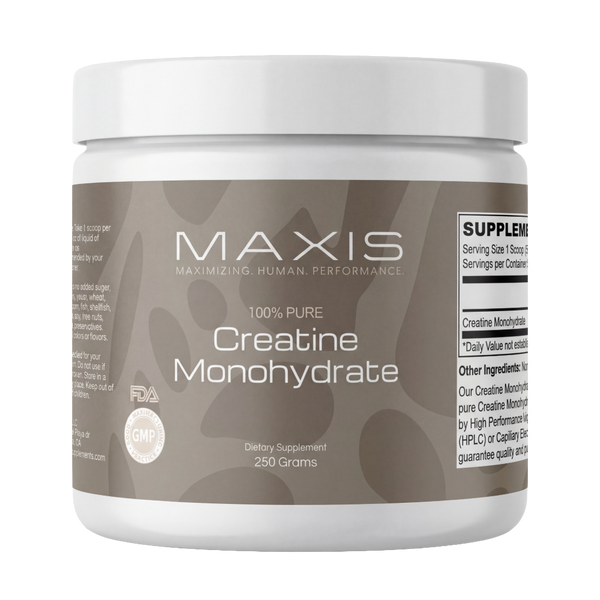
Creatine Monohydrate
Whey provides amino acids for repair; creatine fuels the work that creates the demand for repair.
Pairs with
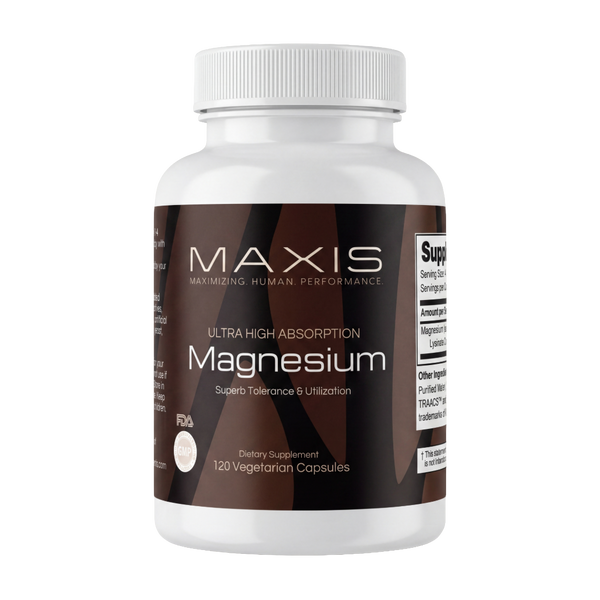
Magnesium
Magnesium supports muscle function and recovery — protein supplies the building blocks.
Pairs with
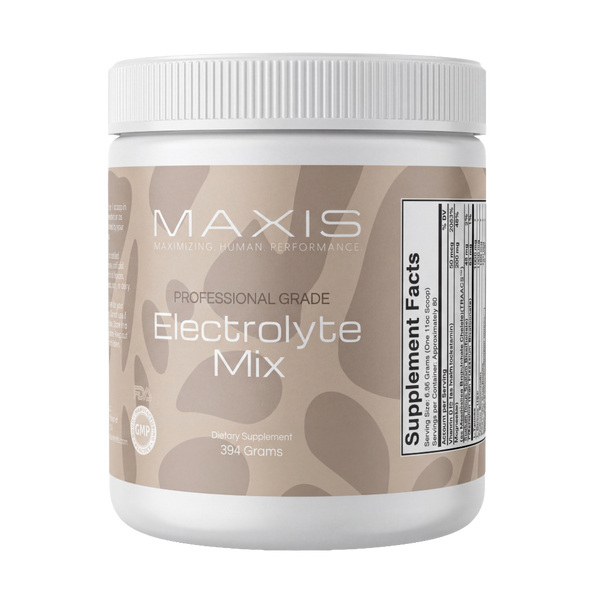
Electrolyte Mix (Daily Hydration)
Hydration and protein together support training capacity and recovery.
Fig.08 — FAQ
Questions
Pure isolates filter out almost everything except the protein — including bioactive compounds in dairy that may support immune function and recovery. Concentrate retains those. The blend gives you the protein density of isolate with the bioactives of concentrate. Pure isolate is for those who want maximum protein per gram and minimum lactose; the blend is a more complete option.
For most active adults, the research supports 1.6–2.2g per kg of bodyweight per day (roughly 0.7–1g per pound) for optimal muscle maintenance and recovery during resistance training. A 180lb person targeting the high end would aim for ~180g of total daily protein from all sources combined — food and supplements together.
Total daily protein matters more than precise timing for most people. That said, taking 20–40g of protein within an hour or two of resistance training is supported by the research. A scoop after your workout, with breakfast, or anytime you need to hit your protein target works.
It's used at less than 1% of the formula as a mixing agent — without it, whey powder clumps in liquid. The amount is far below typical thresholds for soy reactions and is standard in nearly all premium whey products. If you have a documented soy allergy, consult your healthcare provider before use.
It matters for some buyers and not for others. Grass-fed dairy has a moderately different fatty acid profile (higher omega-3, higher conjugated linoleic acid) than grain-fed. The protein quality itself is similar between sources. Where grass-fed sourcing matters most is animal welfare, environmental practices, and ensuring rBGH isn't used.
Yes. Daily protein needs don't disappear on rest days — your body still maintains and repairs tissue. If your whole-food intake covers your daily target on rest days, you don't need a shake; if it doesn't, supplement to fill the gap.
The 2g of sugars per serving is naturally-occurring lactose from the dairy itself, not added sugar. Whey is a milk derivative, and milk naturally contains lactose. The product contains no added sugar — the sweetness comes from stevia and monk fruit.
The active protein molecule is similar across most reputable whey products. Where they differ is in source quality (grass-fed vs commodity), processing method (ion-exchange ultra-filtration retains more bioactives than acid-based methods), and additives (this one uses stevia and monk fruit instead of sucralose, aspartame, or maltodextrin).
COMPLETE YOUR STACK
Products that pair with Grass-Fed Whey Protein (Vanilla).
*These statements have not been evaluated by the Food and Drug Administration. This product is not intended to diagnose, treat, cure, or prevent any disease. Consult your healthcare provider before starting any supplement regimen. Individual results may vary.
Grass-Fed Whey Protein (Vanilla)
$39.99 · In stock